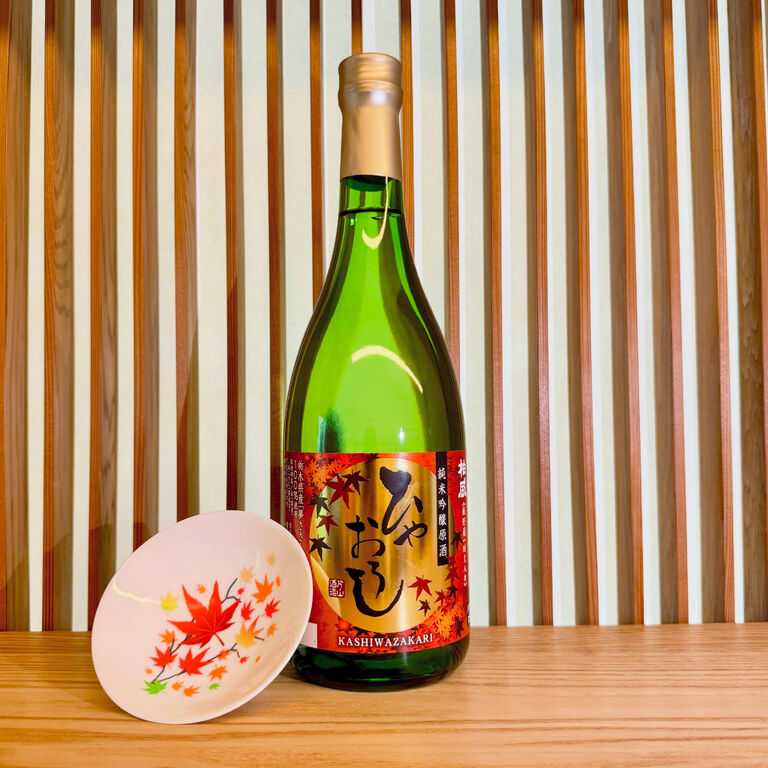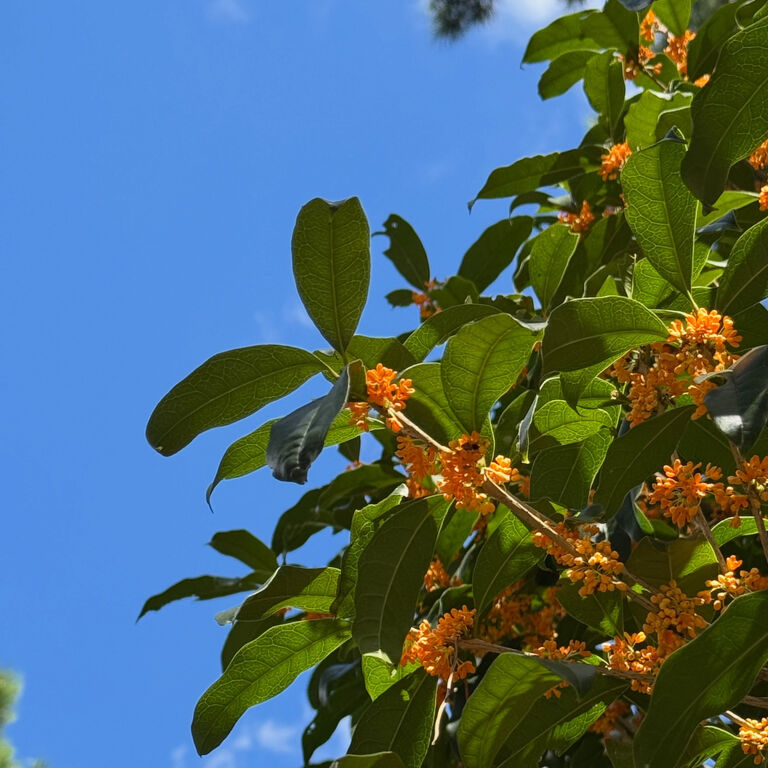
🍂🌼金木犀の香る候🌼🍂
🍂🌼金木犀の香る候🌼🍂
少しずつ秋が深まり
秋の気配が感じられ...
07.Oct.2026
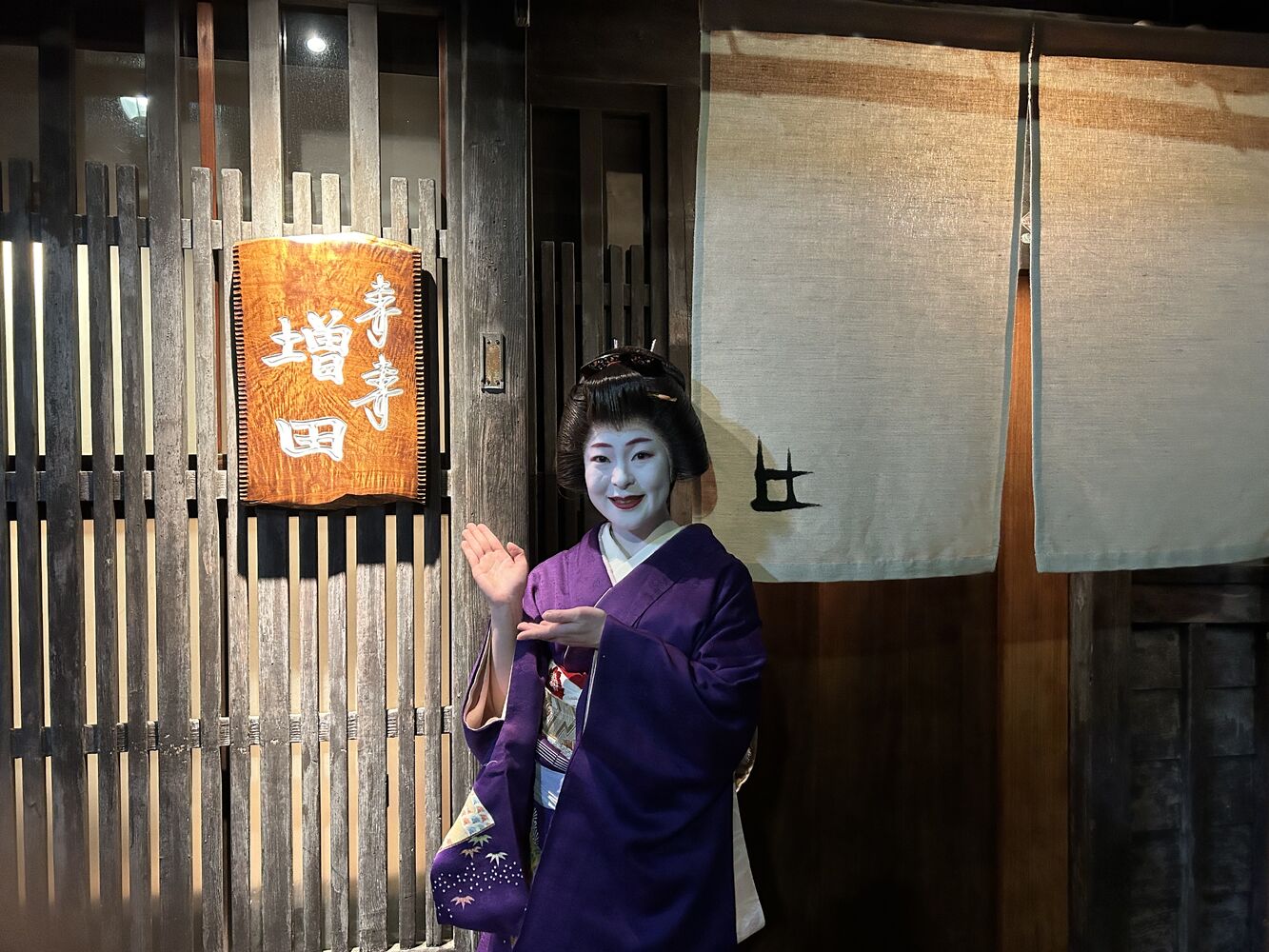
When visiting Kyoto, you may come across the name Nishijin.
For many people, Nishijin is synonymous with Nishijin-ori, one of Kyoto’s most renowned traditional crafts.
Nishijin-ori is a traditional textile culture that has been passed down through generations of craftsmen. Its beauty is certainly captivating, but the true appeal of Nishijin lies not only in the finished textiles. It can also be found in the craftsmanship, commerce, traditional machiya townhouses, and everyday lives that have shaped this neighborhood over centuries.
Our Japanese restaurant, Masumasu Masuda, is also part of that history.
The machiya in which our restaurant is located was once a kimono and textile shop.
Today, we prepare seasonal Japanese cuisine in this historic townhouse.
In this article, we would like to introduce the history of Nishijin-ori, the culture of Nishijin, and why it is meaningful to us to continue our work in a place that once played a role in Kyoto’s textile tradition.
Nishijin-ori refers to a wide range of silk textiles traditionally produced in and around the Nishijin area of Kyoto.
Rather than referring to a single weaving technique or one particular type of textile, the name encompasses various sophisticated weaving techniques and styles.
Silk threads in countless colors, along with gold and silver threads, may be woven into intricate patterns. These textiles have long been used for kimono, obi sashes, ceremonial garments, and other elements of Japanese traditional culture.
The beauty of Nishijin-ori is immediately visible.
But behind that beauty lies something even more important:
the accumulated knowledge, skill, patience, and craftsmanship of generations of artisans.
A single thread becomes part of a finished textile only after passing through many carefully controlled processes and the hands of many skilled people.
Kyoto’s textile tradition has a history stretching back many centuries.
After the establishment of Heian-kyo, the capital of Japan in the late eighth century, institutions responsible for producing textiles for the Imperial Court were established, helping sophisticated weaving techniques develop in Kyoto.
Over the centuries, Kyoto became a center of court culture, religious culture, samurai culture, and the arts.
As demand for beautiful garments and ceremonial textiles grew, textile artisans continued to refine their skills.
Knowledge and techniques were passed from one generation to the next.
This long accumulation of craftsmanship eventually became an important foundation for the textile culture of Nishijin.
The name “Nishijin” is closely associated with one of the most turbulent periods in Kyoto’s history: the Onin War, which took place in the 15th century.
The conflict devastated much of Kyoto, and many craftsmen temporarily left the city.
After the war, textile artisans returned to Kyoto and resumed their work in this area.
The western army led by Yamana Sozen established its military headquarters in this part of Kyoto during the conflict.
Because of this association with the western army’s camp, the area came to be known as Nishijin, literally referring to the “western camp.”
Over time, Nishijin developed into one of Japan’s most important textile-producing districts.
One of the most fascinating aspects of Nishijin-ori is its tradition of specialization and division of labor.
A single artisan does not necessarily complete every stage of production.
Different specialists may be involved in preparing the thread, dyeing, weaving, creating patterns, and finishing the textile.
Each person contributes a particular skill, and together they create one finished piece.
In other words, a single textile contains the knowledge, time, and craftsmanship of many people.
This way of working also reflects the character of Nishijin itself.
Artisans, merchants, shopkeepers, residents, and many other people have supported one another and helped shape the culture of the neighborhood.
Today, many people associate Nishijin primarily with its famous textiles.
But if you walk through the neighborhood, you will discover that Nishijin is much more than a place where textiles were made.
You will find traditional machiya townhouses, narrow streets, craftsmen’s workshops, kimono-related businesses, temples and shrines, local shops, and the everyday lives of people who continue to live and work here.
Nishijin was not created as a tourist destination.
It is a living neighborhood that has developed through centuries of people living, working, trading, and passing traditions from one generation to the next.
That is part of what makes walking through Nishijin so special.
Our restaurant, Masumasu Masuda, is located in one of these traditional machiya townhouses in Nishijin.
And this building has its own connection to the history of the neighborhood.
Before becoming our Japanese restaurant, this machiya was once a kimono shop.
In other words, people once worked here as part of Kyoto’s clothing and textile culture.
Today, we use this same space to prepare seasonal Japanese cuisine.
The work we do is very different from what was done here in the past.
Yet we feel there is also a meaningful connection between the two.
Nishijin-ori begins with individual threads.
Threads are carefully selected, prepared, dyed, and woven together, gradually becoming a finished textile.
Japanese cuisine has a similar quality.
A dish does not simply appear on the table.
We select ingredients.
We prepare them.
We make dashi.
We control heat.
We adjust the seasoning.
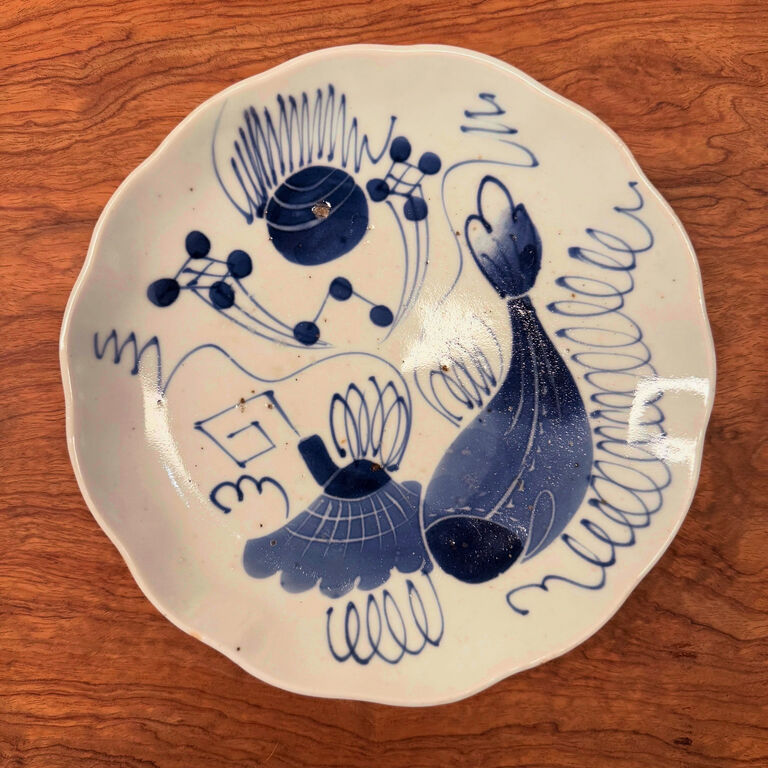
We choose the appropriate vessel.
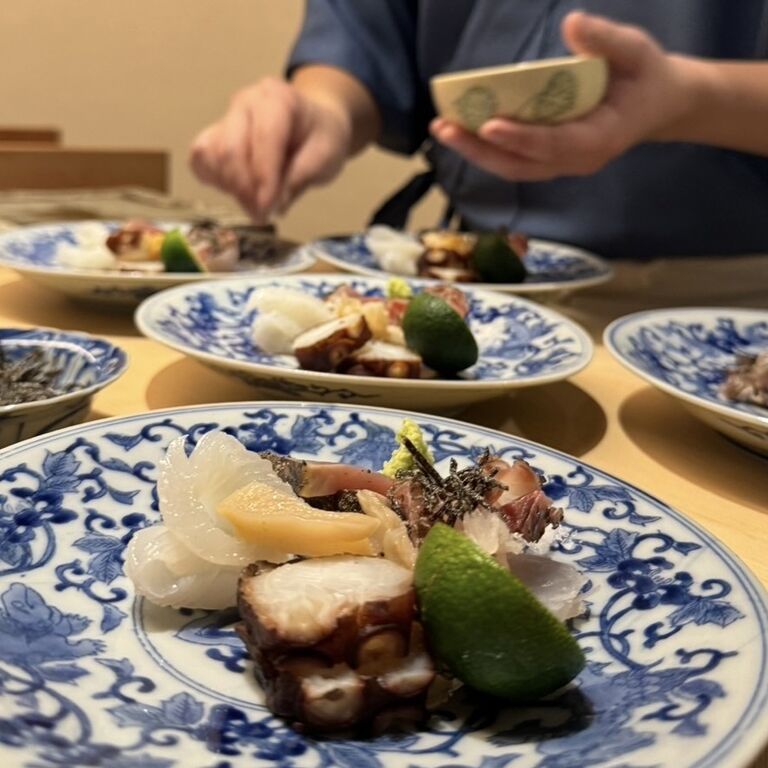
We arrange the food.
And finally, we present it to our guests.
Looking only at the finished dish, it may seem like a moment in time.
But behind that single plate are many people, ingredients, skills, and hours of preparation.
Both Nishijin-ori and Japanese cuisine remind us that what we see at the end is supported by a long process of careful craftsmanship.
Working as a chef in Nishijin makes us especially aware of the values shared by traditional craftsmanship and Japanese cuisine.
Choosing the right materials.
Noticing subtle differences.
Paying attention to every stage of the process.
And spending years developing the skills needed to recognize what is right.
Japanese cooking also requires this kind of judgment.
A recipe alone cannot always determine the perfect result.
The condition of the ingredients, the season, temperature, humidity, and many other factors can influence how a dish should be prepared.
Knowing how to observe these subtle differences and make decisions accordingly is an important part of becoming a Japanese chef.
For us, working in Nishijin, a neighborhood deeply connected to craftsmanship, makes these values feel particularly close to home.
Our chef, Takahito Masuda, was born in Nikko, Tochigi Prefecture.
Although he trained in Japanese cuisine in Kyoto and now cooks in Nishijin, his connection to Nikko and Tochigi remains an important part of his cooking.
Through lifelong connections with people from his hometown, including friends who work with food and local producers, he has access to ingredients that he knows and trusts.
These include Itadaki Trout, raised using the clear waters of Nikko, and Tochigi Wagyu beef.
We combine these ingredients from Tochigi with the techniques and seasonal sensibility of Kyoto cuisine.
This connection between Kyoto and Tochigi is one of the defining characteristics of Masumasu Masuda.
And in a way, it adds another layer to the history of this Nishijin machiya: connections from Nikko are now meeting the history of Kyoto in this former kimono shop.
Every ingredient we use has its own story.
Fish, meat, vegetables, and other ingredients were once living things or came from living things.
We receive these lives and transform them into food.
For that reason, we believe it is our responsibility as cooks to treat ingredients with respect, avoid waste, and bring out their natural qualities as fully as possible.
The Japanese expression “itadakimasu”, traditionally said before eating, reflects an important aspect of Japanese food culture: an acknowledgment of receiving food and life.
Behind every dish are many connections.
The people who grow the ingredients.
Those who raise or harvest them.
Those who transport them.
The producers and suppliers.
The chef who prepares them.
And finally, the person who enjoys the finished dish.
Food exists within a network of people, places, and life.
Nishijin-ori is created by bringing individual threads together to form something greater.
This idea of weaving has a special meaning to us.
Once, this machiya was a kimono shop, connecting people with Kyoto’s textile and clothing culture.
Today, we work here as a Japanese restaurant, creating connections between people and food.
An ingredient carries a life.
We receive that life and transform it into a dish.
A guest enjoys that dish.
A conversation begins.
And perhaps, through that meal, a new connection is created between people.
In a place where threads were once woven, we now weave connections between people, food, and life.
This is one of the reasons we feel such a special connection to this machiya and to Nishijin.
We do not believe that preserving tradition necessarily means leaving everything exactly as it was.
Tradition can also be carried forward by respecting what came before while creating something meaningful for the present.
Nishijin-ori itself has continued through many changes over the centuries.
The skills and traditions have evolved while remaining connected to their roots.
Our machiya has also changed its role.
It was once a kimono shop.
Today, it is a Japanese restaurant.
The history of the building has not disappeared.
Instead, we are adding a new chapter to it.
The people who once worked here.
The people who lived and worked throughout Nishijin.
The history of textiles.
And now, our own work with Japanese cuisine.
Each is like another thread in a much larger fabric.
Together, they form the story of this place today.
When you visit Nishijin, we encourage you to look beyond Nishijin-ori itself.
Walk through the neighborhood.
Look at the traditional machiya.
Notice the narrow streets.
Discover the businesses connected to textiles and kimono.
Observe the craftsmanship and everyday life of the local community.
Once you understand a little of Nishijin’s history, the buildings and streets you pass may begin to look different.
You may discover a side of Kyoto that feels very different from the famous tourist destinations.
It is a quieter, more everyday Kyoto.
A Kyoto shaped by people who have lived and worked here for generations.
After exploring Nishijin, one way to experience the neighborhood is to enjoy seasonal Japanese cuisine inside a machiya that was once a kimono shop.
At Masumasu Masuda, we hope our guests will experience more than just a meal.
The seasonal ingredients.
The dashi.
The vessels.
The presentation.
The atmosphere of the machiya.
And the conversations with the chef and proprietress.
Together, these elements create one experience.
Nishijin-ori has been passed down through generations by artisans, merchants, and local communities.
Its culture continues to live on in Nishijin today, sometimes in traditional forms and sometimes in new ones.
Our machiya was once part of Nishijin’s kimono trade.
Today, it is part of the neighborhood’s culinary culture.
Here in this historic district, we prepare seasonal Japanese cuisine, incorporate ingredients connected to Tochigi, and value the relationships we build with our guests.
Adding our own small chapter to the long history of this neighborhood may be one of the responsibilities we have as people who now work here.
Once you learn about the history of Nishijin-ori, walking through Nishijin can feel different.
A machiya is no longer simply an old building.
A narrow street is no longer simply a street.
A textile shop is connected to generations of craftsmanship.
And a former kimono shop can become a place where people gather around food.
At Masumasu Masuda, we hope you will experience:
the history of Nishijin,
the seasons of Kyoto,
Japanese food culture,
the atmosphere of a traditional machiya,
the lives behind our ingredients,
and the connections created around the table.
Once, threads were woven here.
Today, we weave connections through food.
Connecting people, food, and life.
That is one of the ideas we carry with us as we operate Masumasu Masuda in Nishijin.
When you visit Kyoto, we invite you to take some time to walk through Nishijin, discover its textile heritage, and experience another side of the city.
And if you have the opportunity, we would be delighted to welcome you into this former kimono shop and share with you our seasonal Japanese cuisine, the spirit of Kyoto, and the story of this special place.
ますます増田
住所:京都府京都市上京区旧大宮通中立売上る庇町187−1