🥟🍺西陣オクトーバーフ...
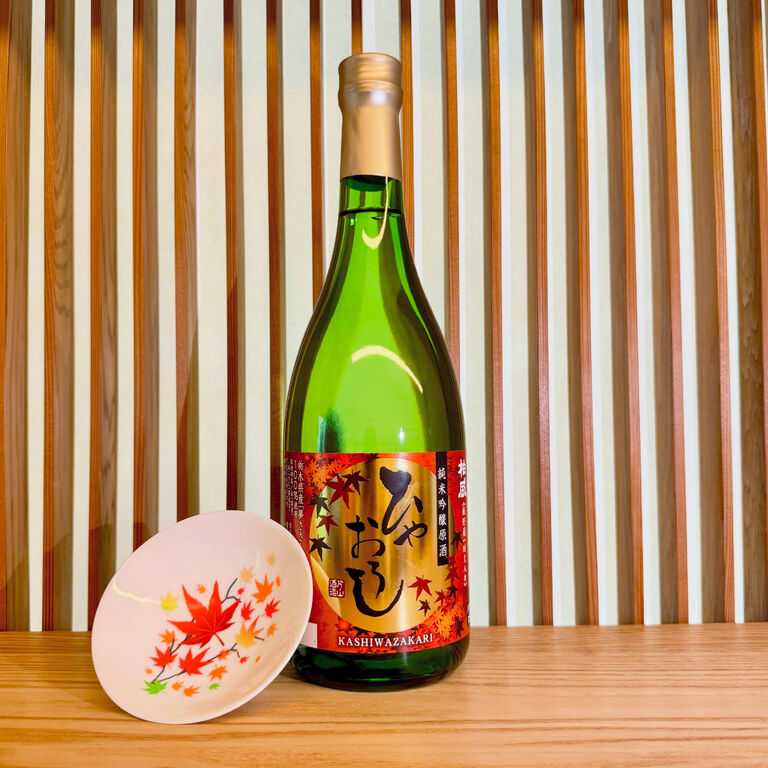
🥟🍺西陣オクトーバーフェスト 🍺🥟
10月24日(土)・25日(日)...
19.Oct.2026
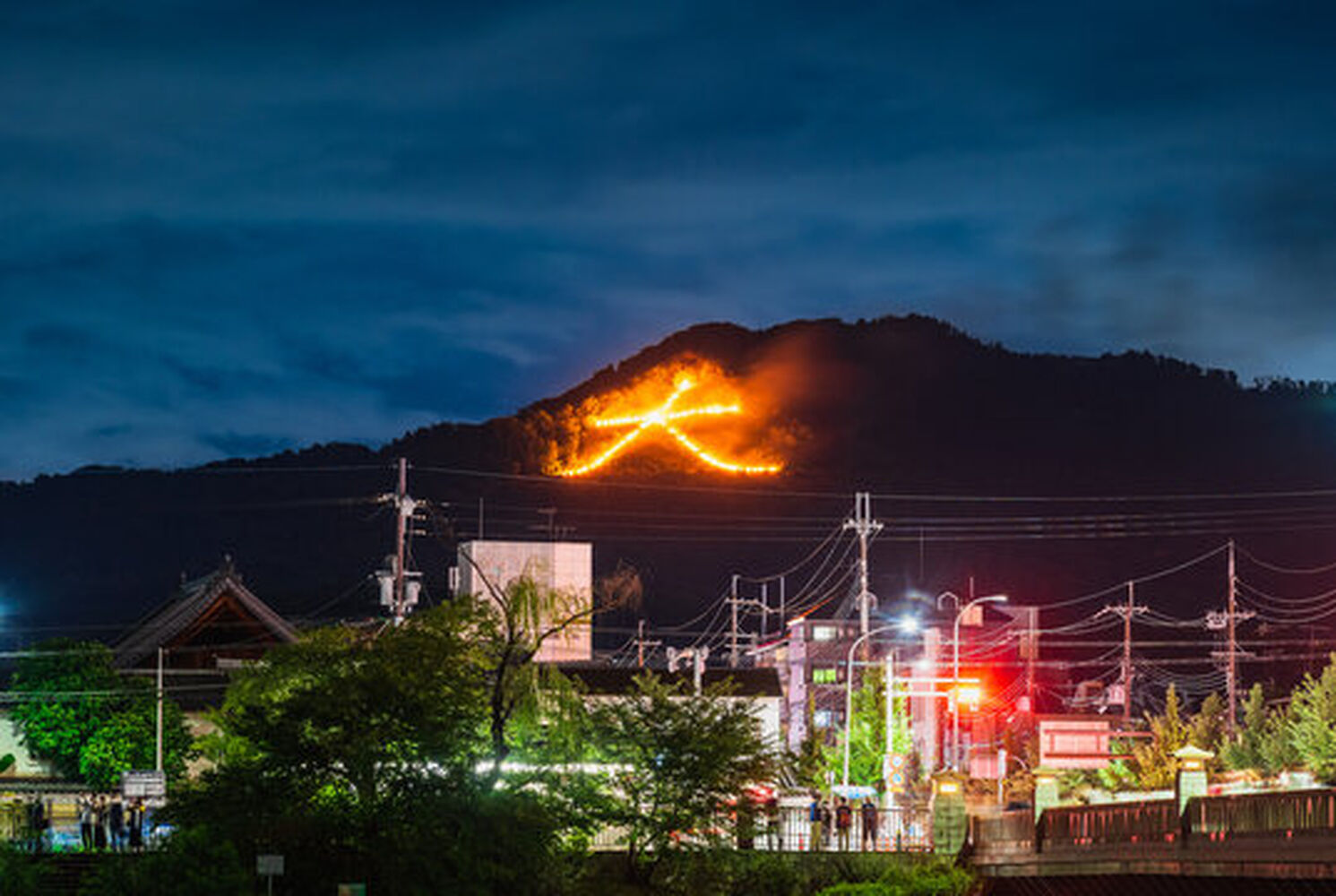
One of the most iconic sights of summer in Kyoto appears on the evening of August 16, when enormous fires are lit on the mountains surrounding the city.
The most famous is the giant character “Dai” (大), meaning “great” or “large,” illuminated on Mount Nyoigatake in the eastern hills of Kyoto.
Outside Kyoto, you may sometimes hear this event referred to as “Daimonji-yaki.”
However, in Kyoto, the traditional name is Gozan Okuribi, or simply Okuribi, meaning “the fires for sending off.”
Why is it called “Okuribi” rather than “Daimonji-yaki”?
And why are these fires lit on the mountains of Kyoto every year on August 16?
The answer lies in the Japanese tradition of Obon, Buddhist beliefs, and centuries of Kyoto’s cultural history.
目次
“Gozan Okuribi” literally means the “five mountain send-off fires.”
The fires are traditionally associated with the end of Obon, a period when ancestral spirits are believed to return to the world of the living.
During Obon, families welcome and spend time with the spirits of their ancestors.
At the end of the period, the spirits are believed to return to the other world.
The fires of Okuribi symbolize sending them safely on their way.
This is why the word “Okuribi”, meaning “send-off fire,” is particularly meaningful.
It is not simply a spectacular display of fire on the mountains.
It is a traditional expression of remembrance, respect, and prayer for one’s ancestors.
The expression “Daimonji-yaki” may be familiar to people outside Kyoto, but it does not fully express the meaning of the event.
The most famous of the fires is the large character “Dai,” so it is understandable that people might describe the event as the “Daimonji fire.”
However, the event as a whole is known as Gozan Okuribi, because five different fires are lit on mountains around Kyoto.
More importantly, the purpose of the fires is connected with sending off the spirits of ancestors at the end of Obon.
So rather than thinking of it simply as a giant character being “burned,” it is more appropriate to understand it as a traditional send-off fire.
The date is closely connected with Obon.
Obon is one of Japan’s most important traditions for remembering ancestors.
Families may visit graves, prepare offerings, and spend time together during this period.
At the end of Obon, the spirits who have returned are sent back.
In Kyoto, this tradition has developed into the spectacular but deeply spiritual custom of Gozan Okuribi.
According to Kyoto City, the origins of Gozan Okuribi are not definitively known.
It is thought to have developed after Buddhist traditions became more widely established among ordinary people, particularly from the medieval period onward. Various theories connect its origins to different historical figures and religious practices, but there is no single confirmed founder or date.
This uncertainty is itself an important part of the history.
Rather than being a tradition created at one clearly documented moment, Gozan Okuribi appears to have developed gradually through the beliefs and practices of generations of Kyoto residents.
As the name suggests, five mountain fires are traditionally lit around Kyoto.
They are:
Dai — 大
Myo and Ho — 妙法
Funagata — 船形
Hidaridaimonji — 左大文字
Toriigata — 鳥居形
Although “Myo” and “Ho” are two characters, they are regarded together as one of the five forms.
Each has its own distinctive shape and location.
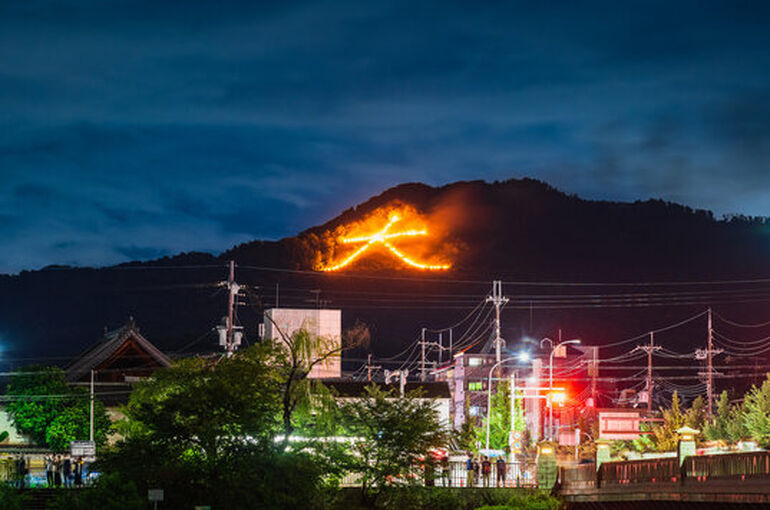
The first and most famous fire is the enormous “Dai” (大) on Mount Nyoigatake in the eastern mountains of Kyoto.
It is traditionally lit at around 8:00 p.m. on August 16.
Because of its size and location, it can be seen from many parts of Kyoto.
The character is created using numerous fire beds arranged across the mountainside.
Wooden prayer tablets, known as gomagi, are traditionally burned as part of the ritual, carrying people’s prayers and wishes.
The sight is beautiful, but its meaning goes beyond the visual spectacle.
The fire represents the traditional act of sending the ancestral spirits home at the end of Obon.
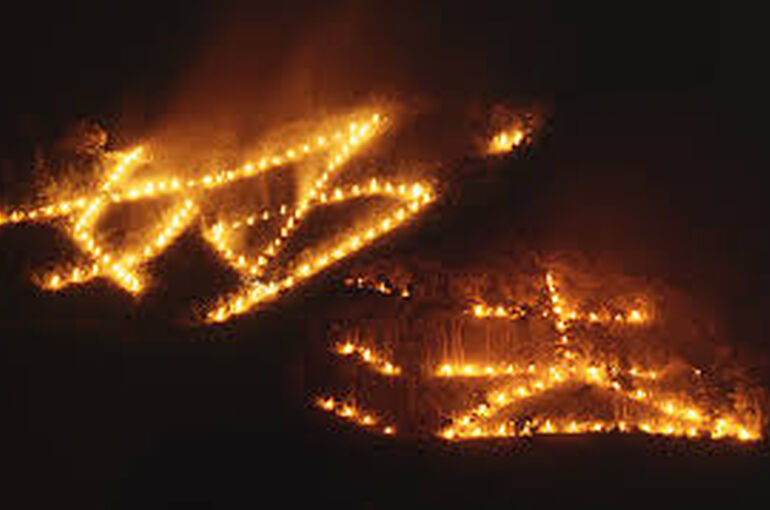
The next form consists of the two characters “Myo” (妙) and “Ho” (法) on the mountains of Matsugasaki.
Together, they form the Buddhist expression Myoho, often translated in relation to the “wonderful law” or profound teachings of Buddhism.
The two characters are lit separately but are considered one of the five forms of Gozan Okuribi.
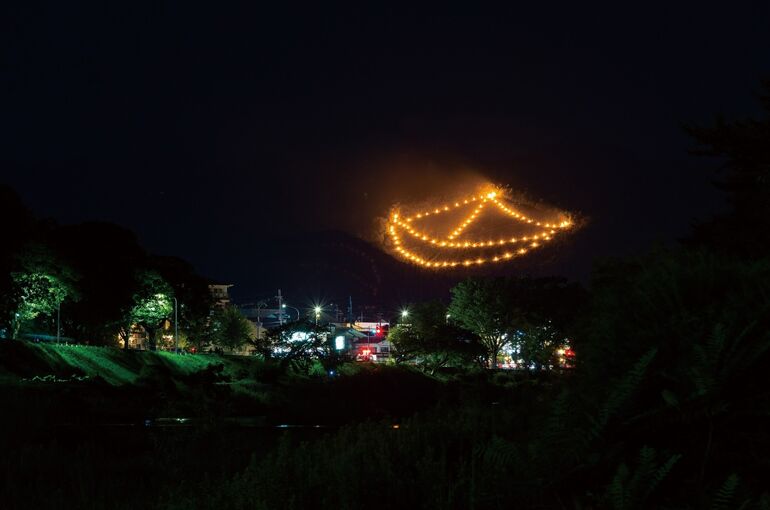
In Nishigamo, one of the fires takes the shape of a boat.
This is known as Funagata, meaning “boat-shaped.”
Unlike the character-shaped fires, this one represents a recognizable object.
The image of a boat has often been associated with the idea of carrying or transporting the spirits toward the other world.
The sight of a glowing boat appearing on the mountainside is one of the most distinctive images of Kyoto’s summer.
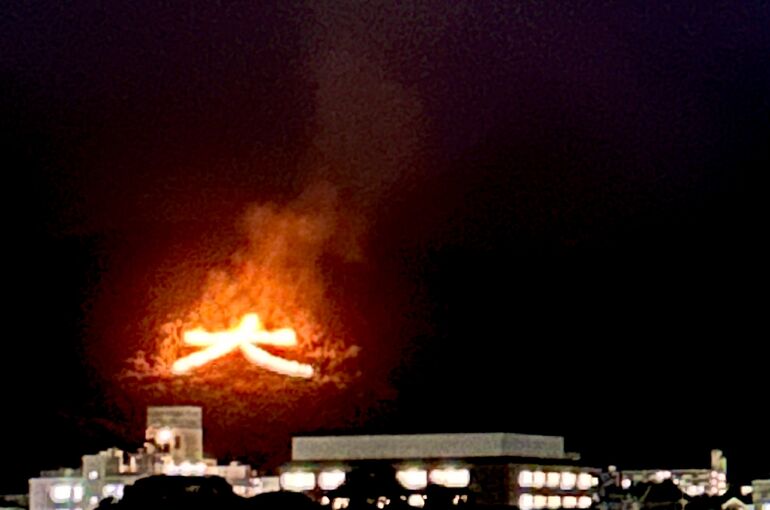
Another large “Dai” appears on Mount Daimonji in the northern part of Kyoto.
It is known as Hidaridaimonji, or “Left Daimonji,” distinguishing it from the more famous Dai in the eastern mountains.
Although both are shaped like the character 大, they are separate fires with their own traditions.
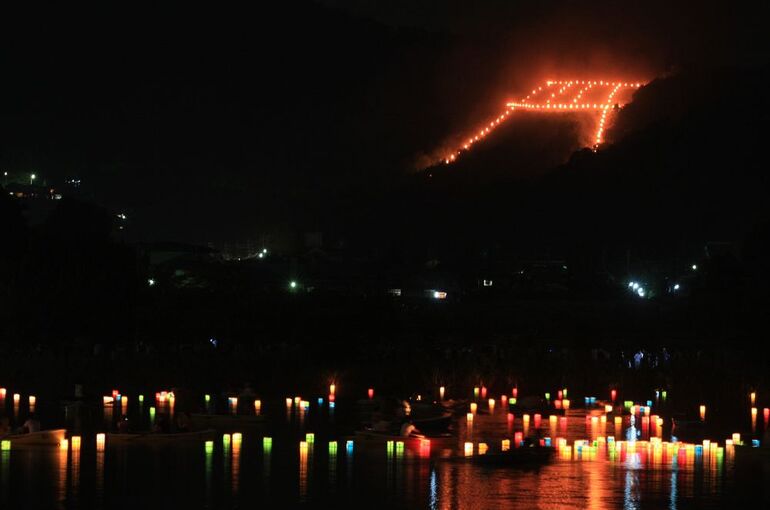
The final form is Toriigata, located on Mount Mandarayama in the Saga area of western Kyoto.
Instead of a character, the fire forms the shape of a traditional torii gate, the gateway commonly associated with Shinto shrines.
It is particularly striking when viewed from the surrounding areas of Arashiyama and western Kyoto.
There is no single definitive explanation for why the fires came to be displayed on the mountains.
One traditional explanation connects the practice with the idea of sending the spirits of ancestors back to the other world.
Kyoto’s official tourism information also introduces the theory that earlier customs involving lanterns and fires gradually developed into the mountain fires seen today.
The mountains surrounding Kyoto form a natural frame around the city.
By placing the fires high on the mountainsides, the light becomes visible across the basin of Kyoto.
The result is both a spiritual ritual and an extraordinary expression of Kyoto’s relationship with its surrounding landscape.
The exact origins remain uncertain.
However, historical records show that several of the fires were already established by the early Edo period.
The 1665 publication Fuso Kyoka-shi, for example, contains a record of Hidaridaimonji.
Other historical references indicate that forms such as Dai, Myoho, and Funagata were already known by this period.
This means that the tradition has been passed down for centuries.
It has survived changes in religion, society, politics, and everyday life.
The fires we see today are therefore not simply a modern Kyoto attraction.
They are part of a much longer cultural history.
For visitors, the fires may first appear simply beautiful.
And they certainly are.
But knowing their meaning changes the experience.
They are not merely lights decorating the Kyoto skyline.
They represent remembrance.
They represent the end of Obon.
They represent the act of sending ancestors back.
And they represent the prayers and wishes of generations of people who have continued the tradition.
The Kyoto Cultural Heritage information emphasizes that Gozan Okuribi should not be viewed only as something beautiful or spectacular, but also as a moment to remember the spiritual meaning behind the fires and the ancestors being sent off.
Once you understand this background, the fires may look a little different.
At Masumasu Masuda, we believe that Japanese cuisine is not only about ingredients and cooking techniques.
It is also about the seasons, traditions, festivals, history, and culture surrounding food.
For this reason, during August, we include a dish inspired by Gozan Okuribi in our seasonal omakase course.
Rather than simply reproducing the shape of the “Dai” character, we want the dish to evoke the season and the cultural meaning of the fires.
Obon.
The changing season.
Remembering those who came before us.
And the tradition of sending the spirits home.
We hope that understanding these ideas will allow our guests to experience the dish in a different way.
A Japanese dish can be enjoyed for its taste.
But it can also become a doorway into Japanese culture.
Masumasu Masuda is also open during the Obon period.
Obon is an important time for families in Japan, when people often return to their hometowns and gather with relatives.
For families who have returned to Kyoto, it can be a meaningful opportunity to sit together around a meal.
Perhaps you are returning home for the first time in a while.
Perhaps your family is visiting Kyoto from another part of Japan.
Or perhaps you are traveling with relatives from overseas.
A seasonal Japanese meal can become a memorable part of that reunion.
At Masumasu Masuda, we welcome guests who would like to spend this special time together over seasonal Japanese cuisine.
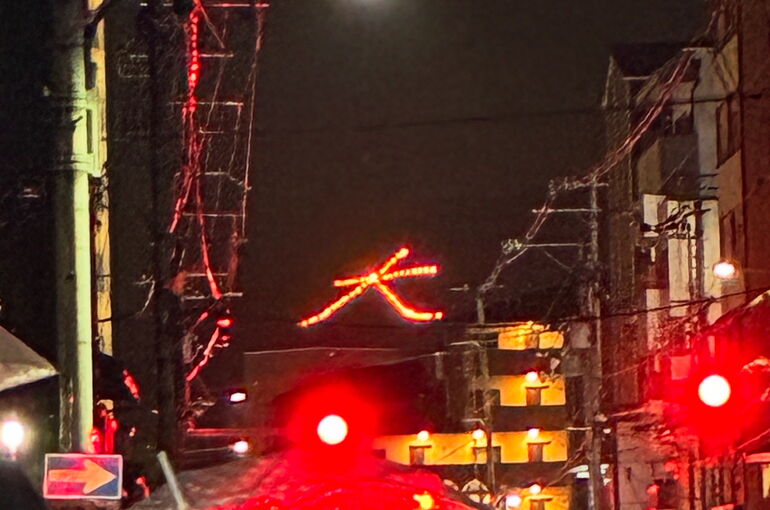
There is another special connection between our restaurant and Gozan Okuribi.
From the street in front of Masumasu Masuda, if you head south and look east toward the area around the former Omiya Street and Nakadachiuri Street, you can see toward the eastern mountains in the direction of Ginkaku-ji.
From this area, the Dai fire on Mount Nyoigatake can be visible.
So on the evening of August 16, when the fires are lit, we sometimes pause the omakase course for a moment and invite our guests to step outside and look at the fire.
The meal stops.
The conversation pauses.
And everyone looks toward the mountains.
For a few moments, the entire restaurant can share the same view of Kyoto’s summer night.
Of course, visibility depends on weather conditions and the exact circumstances that evening.
But when the fire can be seen, we believe it is worth taking a moment to experience it.
Japanese cuisine has always been closely connected to the seasons.
Spring has its ingredients and celebrations.
Summer has its own ingredients, festivals, and customs.
Autumn and winter bring their own landscapes and traditions.
For us, “seasonal cuisine” does not mean ingredients alone.
The season also includes:
festivals,
local customs,
landscapes,
history,
the weather,
and the way people live.
That is why Gozan Okuribi has a place in our August cuisine.
While enjoying your meal, you may find yourself talking about:
Why are the fires lit on August 16?
Why is the event called Okuribi?
What does Obon mean?
Why are there five different forms?
And what do these fires mean to the people of Kyoto?
We believe that learning a little about these traditions can make a meal more meaningful.
Every year on August 16, the mountains surrounding Kyoto are illuminated one after another.
The characters and shapes appear against the dark summer sky.
For visitors, it can be one of the most unforgettable sights of a Kyoto trip.
But behind that beauty is a much quieter meaning.
The fires are connected to the people who came before us.
They are part of Obon.
They are a way of saying farewell.
They are an expression of remembrance.
And they are a tradition that generations of Kyoto residents have continued to protect.
So when you look at the “Dai” burning on the mountain, perhaps you will see more than a beautiful symbol.
You may also see a small glimpse into the way Japanese people have thought about family, ancestors, life, and remembrance for centuries.
Because we operate a Japanese restaurant in Nishijin, we want to share not only Japanese cuisine but also the cultural background surrounding it.
In August, that means sharing the story of Gozan Okuribi.
A dish inspired by the fires.
A meal during Obon.
A view of the Dai from near our restaurant.
And a conversation about why Kyoto continues this tradition every year.
These are all different ways of experiencing Kyoto.
Taste the season.
Learn the history.
Look toward the mountains.
And share the moment with someone important to you.
If you are visiting Kyoto in August, consider spending some time away from the busiest tourist areas.
Come to Nishijin.
Walk through the historic streets and traditional machiya neighborhoods.
Learn about Kyoto’s textile heritage.
Enjoy seasonal Japanese cuisine.
And, if you are here on August 16, experience the atmosphere of Gozan Okuribi.
At Masumasu Masuda, we would be delighted to welcome you during the Obon season.
Whether you are traveling with family, returning to Kyoto for Obon, or visiting Japan from overseas, we hope your meal becomes part of your Kyoto memories.
Gozan Okuribi is one of Kyoto’s most recognizable summer traditions.
But it is more than a beautiful sight.
It is connected to Obon, to the remembrance of ancestors, to Buddhist traditions, and to the people of Kyoto who have continued to protect this culture across generations.
So remember:
It is not simply “Daimonji-yaki.”
In Kyoto, it is Gozan Okuribi — the fires that send the spirits home.
And on August 16, if you are dining at Masumasu Masuda and the conditions allow, we may pause our course for a moment and invite you to look toward the eastern mountains.
There, the great “Dai” may be glowing in the distance.
For a moment, the meal becomes part of the landscape.
The landscape becomes part of the season.
And the season becomes part of the story of Kyoto.
That is how we hope to share Japanese culture at Masumasu Masuda — not only through what you taste, but through what you see, learn, and experience around the meal.
ますます増田
住所:京都府京都市上京区旧大宮通中立売上る庇町187−1