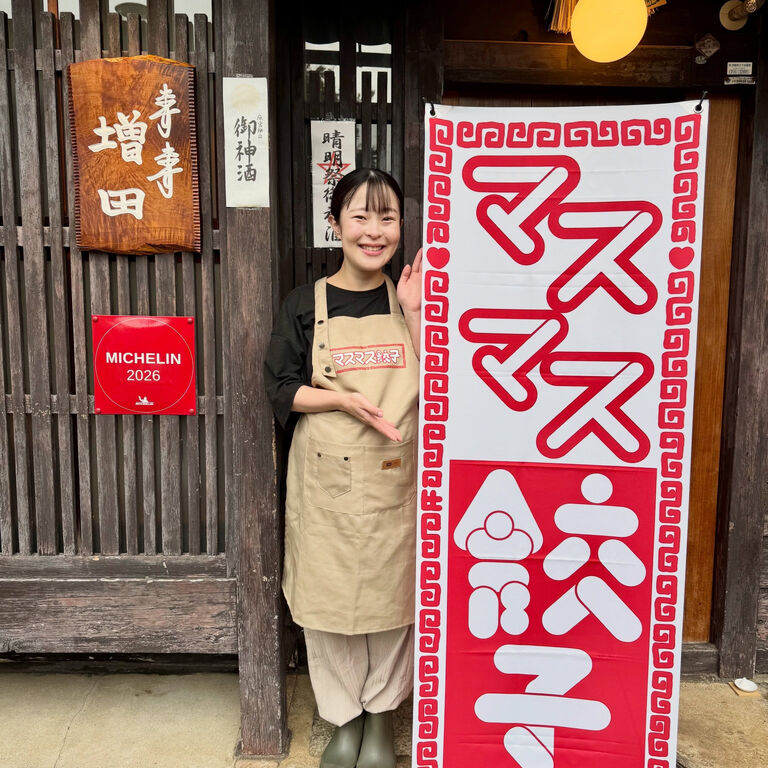
🥟マスマス餃子、いよい...
🥟マスマス餃子、いよいよ明日出店✨
大将がデザインした
「マ...
24.Oct.2026
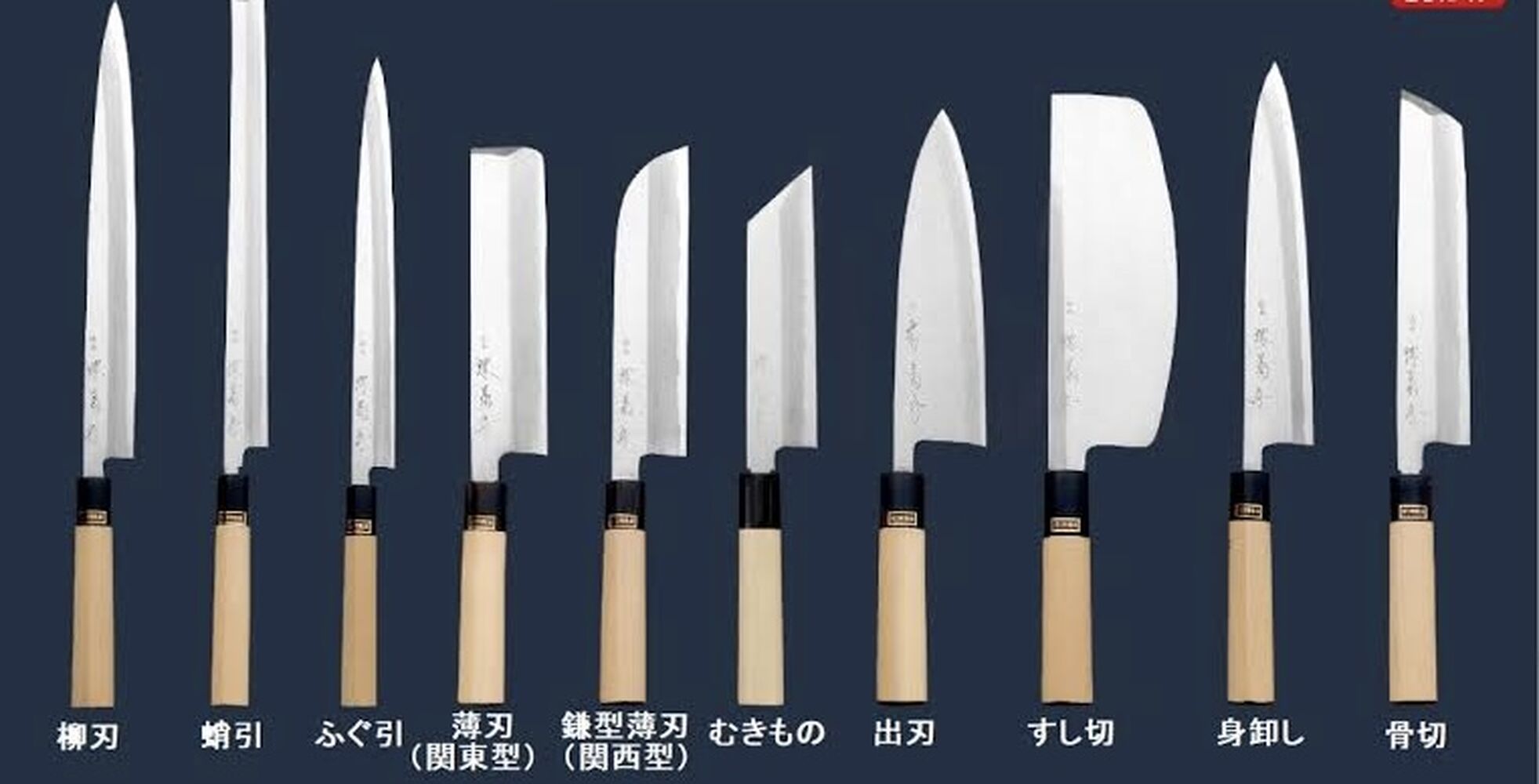
In a Japanese kitchen, there is rarely just one type of knife.
Japanese cuisine uses a remarkable variety of knives, each designed for a particular ingredient, preparation, or cooking technique.
There are knives for vegetables, knives for filleting fish, knives for slicing sashimi, specialized knives for cutting the bones of pike conger, knives for preparing eel, knives for slicing fugu, and even specialized knives for cutting soba.
Why are there so many different knives?
Because in Japanese cuisine, the way an ingredient is cut can change its texture, appearance, mouthfeel, and even the way its flavors are perceived.
A knife is not simply a tool for making something smaller.
For a Japanese chef, it is an extension of the hand.
When we think of cooking, we often think about seasoning, heat, dashi, and ingredients.
But before any of these things happen, there is often another important step:
cutting.
The direction of the cut.
The angle of the blade.
The pressure applied.
The condition of the blade.
The texture and fibers of the ingredient.
Its temperature and moisture.
All of these factors affect how the final dish will taste.
The same fish can have a noticeably different texture depending on how it is cut.
The same vegetable can feel completely different in the mouth depending on how its fibers are treated.
This is why Japanese chefs learn not only how to use knives, but also how to understand the ingredients themselves.
One of the classic Japanese knives for vegetables is the usuba.
It is particularly suited to delicate vegetable preparation and techniques such as katsuramuki, in which a vegetable such as daikon radish is peeled into an extremely thin, continuous sheet.
Katsuramuki is not simply about making something thin.
The chef needs to maintain an even thickness while understanding the vegetable’s fibers and moisture.
The resulting texture can be very different from that of a vegetable that has simply been sliced with an ordinary knife.
The thin sheets may then be cut into fine strips and used as tsuma, the delicate garnishes often served with sashimi.
A technique that begins with a knife therefore becomes part of the final dining experience.
The deba is a heavier Japanese knife traditionally used for breaking down fish.
Its thick, strong blade is designed to handle fish bones and other firm parts.
It can be used for removing the head, separating the bones, and filleting fish.
But strength is not the same as simply using force.
A skilled chef follows the structure of the fish and works along the bones while trying to preserve as much of the flesh as possible.
The condition of the fish after it has been filleted can influence everything that follows.
How cleanly the bones are removed.
How much flesh is preserved.
Whether the flesh has been crushed.
And how the fish is subsequently cooked or served.
The knife is already influencing the final dish at this stage.
In Kansai, including Kyoto, the yanagiba is one of the traditional knives used for preparing sashimi.
In the Kanto region, the takohiki has traditionally been used for the same purpose.
These knives are generally used with a pulling motion rather than repeatedly sawing back and forth.
The long, narrow blade allows the chef to make a clean cut through the fish.
Why does that matter?
Because the condition of the cut surface affects the texture of sashimi.
A cleanly sliced piece of fish can have a smoother mouthfeel than one whose fibers have been crushed or torn.
The difference may seem subtle.
But Japanese cuisine often places great importance on these subtle differences.
Pike conger, known as hamo in Japanese, is particularly important in Kyoto cuisine, especially during summer.
Hamo contains many fine bones, making it difficult to eat unless the bones are finely cut.
This is where honekiri, or bone-cutting, comes in.
The chef cuts through the tiny bones while leaving the skin intact.
The cuts must be extremely close together and remarkably consistent.
Cut too deeply, and the flesh can fall apart.
Cut too shallowly, and the bones remain noticeable.
The depth and rhythm of the cuts directly affect the texture when the hamo is eaten.
This is one of the clearest examples of how a knife technique becomes part of the taste and texture of a dish.
There are also specialized knives for preparing unagi, or Japanese eel.
The way eel is prepared differs by region.
In Kansai, eel is traditionally opened from the belly, while in Kanto it is traditionally opened from the back.
These regional differences are more than simple variations in technique.
They reflect the different culinary cultures that developed throughout Japan.
The shape and use of specialized knives are therefore also connected to regional food traditions.
A knife can tell us something about the history of Japanese cuisine.
Another highly specialized knife is the fuguhiki, traditionally used for slicing fugu, or Japanese pufferfish.
Fugu sashimi is famous for being sliced extremely thinly.
When prepared correctly, the slices can be so thin that the pattern of the plate beneath them may be visible.
But achieving this requires more than simply slicing thinly.
The flesh must remain intact, and the thickness must be remarkably consistent.
The knife is designed to help the chef achieve the delicate texture and presentation expected from this particular dish.
Again, the knife is closely connected to the nature of the ingredient and the culinary technique developed around it.
Japanese cuisine also has specialized knives for soba, or buckwheat noodles.
A soba knife is designed to cut noodles into consistent widths.
Consistency matters because noodles of different thicknesses cook at different rates.
A mixture of thick and thin noodles can therefore create an uneven texture.
The chef uses the length and weight of the knife, together with rhythm and technique, to produce uniform noodles.
Once again, the knife is not merely cutting food.
It is helping determine the final eating experience.
There are also knives designed for breaking down poultry and other meats.
Chicken has a completely different structure from fish.
There are bones, joints, connective tissue, and different textures of meat.
A chef must understand the anatomy of the ingredient before deciding where and how to place the blade.
The same principle applies throughout Japanese cuisine:
A good knife cannot replace an understanding of the ingredient.
The chef must understand both.
Some Japanese knives are extremely thin and lightweight, making them suitable for delicate ingredients such as fruit and soft foods.
Soft ingredients can easily be crushed if too much pressure is applied.
A sharp, delicate blade can pass through the ingredient with minimal pressure.
With fruit, for example, the chef may want to minimize unnecessary loss of juice and preserve the natural texture.
This is another reason why cutting is part of cooking.
The goal is not simply to make something look beautiful.
It is to preserve what makes the ingredient itself special.
Japanese kitchens also use knives suited to kiritsuke, the precise cutting and shaping of ingredients for cooking and presentation.
The way vegetables are cut can affect both cooking and texture.
A daikon radish, for example, can be cut into rounds, half-moons, wedges, strips, or other shapes.
Different cuts expose different amounts of surface area to heat and seasoning.
They also create different textures and visual impressions.
Even before seasoning is added, the knife has already begun shaping the dish.
Yes—but not simply because one knife is better than another.
What matters is choosing the appropriate knife for the ingredient and knowing how to use it.
With sashimi, the condition of the cut surface affects mouthfeel.
With vegetables, the treatment of the fibers affects texture.
With hamo, the depth and rhythm of the bone cuts determine how the tiny bones are perceived.
With fruit, the way the blade enters can influence how much the flesh is crushed and how much juice is released.
In other words:
The knife changes the physical condition of the ingredient before the ingredient ever reaches the pan, grill, or serving plate.
That is why knife work is itself a form of cooking.
Of course, simply owning expensive or specialized knives does not make someone a skilled Japanese chef.
A chef needs to understand:
A knife is only as useful as the person holding it.
The chef must observe the ingredient and adjust accordingly.
How fatty is today’s fish?
How much moisture does this vegetable contain?
How has the ingredient changed with the season?
What is its condition today?
These observations determine how the knife should be used.
For a Japanese chef, sharpening knives is also an important part of the craft.
A dull knife can require unnecessary pressure.
That pressure can crush delicate ingredients or damage their texture.
A properly sharpened knife can enter the ingredient cleanly and with much less force.
Sharpening is therefore not simply maintenance.
It is part of preparing for service.
The chef checks the condition of the blade, sharpens it appropriately, and prepares for the ingredients that will be handled that day.
A well-maintained knife becomes a precise instrument in the chef’s hands.
Japanese knives also reveal something about the history and regional diversity of Japanese cuisine.
The yanagiba and takohiki reflect regional traditions.
Different methods of preparing eel reflect regional culinary cultures.
Hamo became particularly important in Kyoto cuisine.
Fugu developed its own specialized preparation techniques.
Soba developed its own cutting tradition.
Each technique emerged from people, ingredients, geography, and history.
In that sense, a Japanese knife is not merely a kitchen utensil.
It can also be a small piece of culinary history.
Japanese cuisine is often associated with dashi, seasonal ingredients, beautiful tableware, and precise presentation.
But many dishes begin much earlier.
With the knife.
Filleting a fish.
Slicing sashimi.
Preparing vegetables.
Peeling daikon with katsuramuki.
Performing honekiri on hamo.
Preparing fruit.
Each action contributes to the final dish.
That is why we do not think of a knife simply as a tool.
For a Japanese chef, a knife is an extension of the hand and a means of bringing out the character of an ingredient.
At Masumasu Masuda, our monthly changing omakase course is prepared in a traditional Kyoto machiya in Nishijin.
As the seasons change, so do the ingredients—and naturally, the knife work changes with them.
Fish is filleted.
Sashimi is prepared.
Vegetables are precisely cut.
Seasonal ingredients are shaped according to how they will ultimately be cooked and served.
When enjoying Japanese cuisine, we invite you to look beyond the finished dish.
You might wonder:
“What kind of knife was used to prepare this?”
“How was the ingredient cut?”
“Why does this piece of fish have this particular texture?”
A single slice of fish or a small piece of vegetable may contain much more work than is immediately visible.
A knife begins the process.
The ingredient passes through the chef’s hands.
And eventually, that work becomes a dish on the table.
Japanese cuisine begins with the knife.
At Masumasu Masuda, we hope you will not only taste Japanese cuisine, but also discover some of the craftsmanship and culinary culture hidden within each dish.
ますます増田
住所:京都府京都市上京区旧大宮通中立売上る庇町187−1