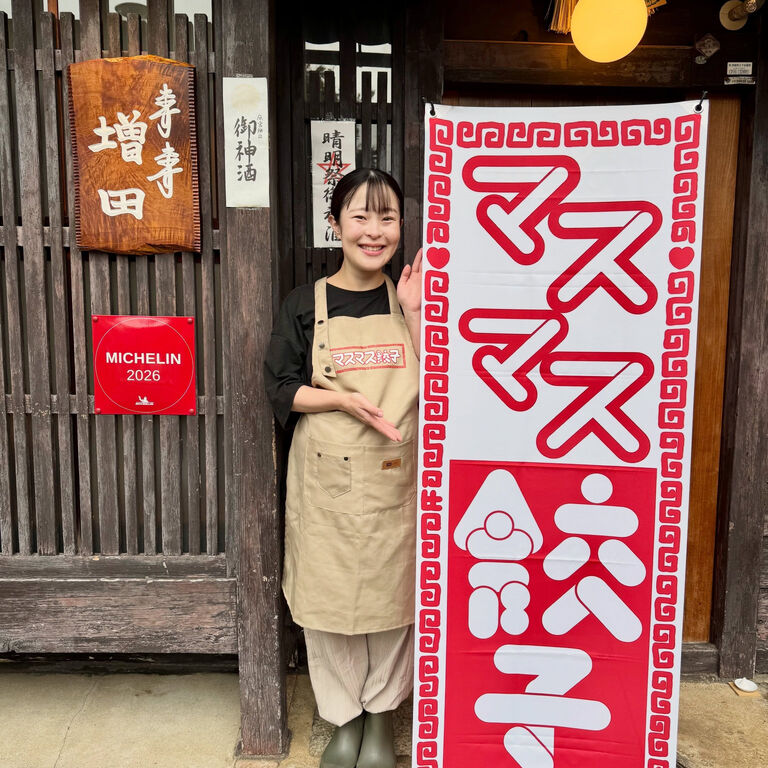
🥟マスマス餃子、いよい...
🥟マスマス餃子、いよいよ明日出店✨
大将がデザインした
「マ...
24.Oct.2026
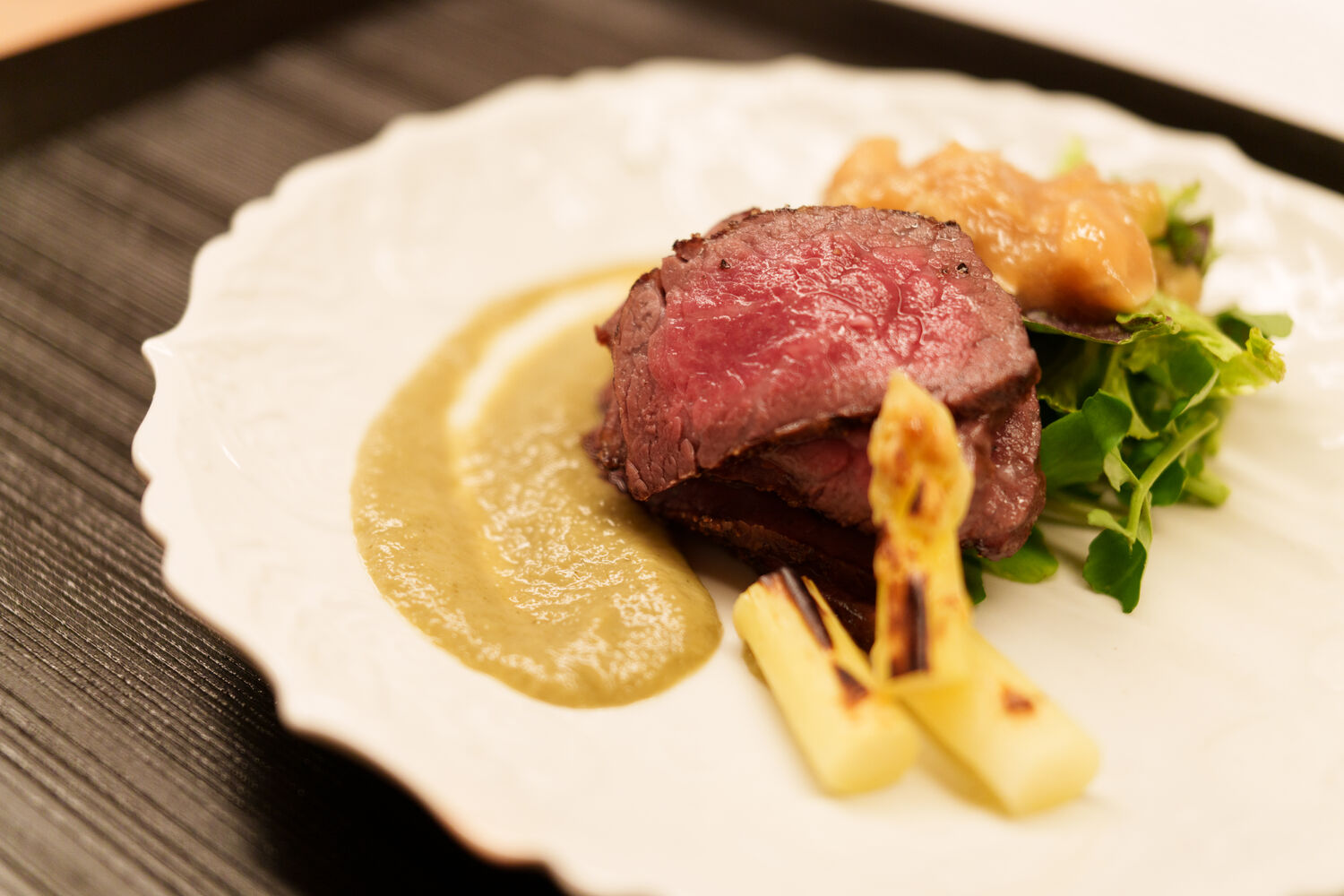
When people think of Japanese cuisine, they may first imagine seasonal seafood, vegetables, rice, and carefully prepared dashi.
At Masumasu Masuda, however, we also serve Japanese Wagyu as part of our seasonal omakase cuisine.
One of the Wagyu brands particularly important to us is Tochigi Wagyu.
Not “Tochigi Japanese Beef,” but officially Tochigi Wagyu.
For us, this is more than simply a high-quality ingredient.
The chef was born and raised in Nikko, Tochigi Prefecture, and one of his childhood classmates runs a butcher shop in Nikko that handles Tochigi Wagyu.
Because of this personal connection to Tochigi, we are able to bring the flavors of our chef’s hometown to our restaurant in Nishijin, Kyoto.
We regularly incorporate Tochigi Wagyu into our monthly changing omakase course, preparing it differently depending on the season and the ingredients available at that time.
It may be charcoal-grilled and prepared in a style inspired by sukiyaki, served as Japanese-style ginger pork, made into a Japanese beef cutlet, or even given a mapo-style preparation.
The same Wagyu can express completely different flavors depending on how it is prepared.
目次
Tochigi Wagyu is a premium Wagyu brand from Tochigi Prefecture.
It is produced by designated farmers in Tochigi using Japanese Black cattle and must meet specific quality standards to be recognized as Tochigi Wagyu.
Tochigi has developed a strong reputation for Wagyu production through generations of farmers, breeding expertise, and careful feeding and raising practices.
The Tochigi Wagyu brand was established in 1988 and has since become one of Tochigi Prefecture’s representative agricultural products.
For our chef, Tochigi Wagyu also has a very personal meaning.
He was born in Nikko and grew up surrounded by the food culture of Tochigi.
Today, he has the opportunity to take ingredients from his hometown and reinterpret them through the techniques and culinary culture he developed in Kyoto.
That connection is one of the foundations of Kyoto × Tochigi, an important part of the identity of Masumasu Masuda.
The term A5 Wagyu is familiar to many people around the world.
However, A5 does not simply mean “the most delicious beef.”
Japanese beef grading evaluates two major aspects:
A refers to the yield grade.
5 refers to the meat quality grade.
The meat quality grade considers several factors, including marbling, meat color and luster, firmness and texture, and the color and quality of the fat.
Therefore, A5 is an important indication of quality, but it does not automatically mean that every person will consider it the most delicious type of beef.
As chefs, we believe there is much more to selecting Wagyu than simply looking at the grade.
The quality of the fat.
The flavor of the lean meat.
The cut.
The condition of the meat.
And, most importantly, whether it is suitable for the particular dish.
These are all important considerations.
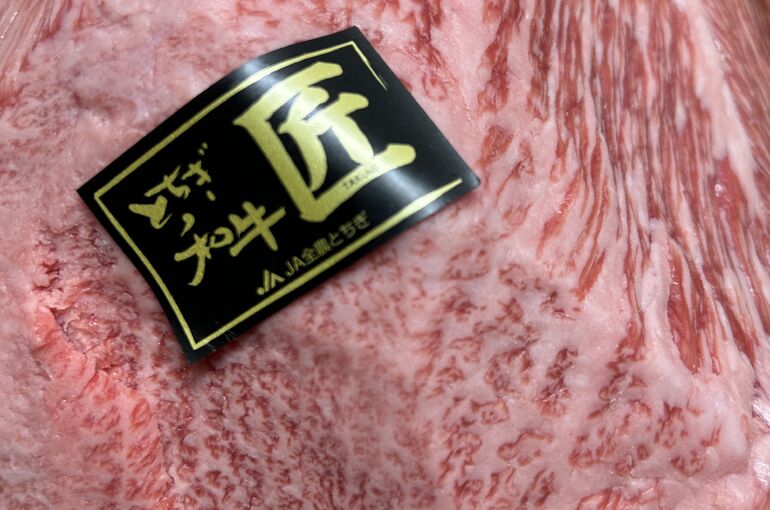
Among Tochigi Wagyu, there is an even more exclusive designation known as Tochigi Wagyu Takumi.
Under the current standards, Tochigi Wagyu Takumi must meet the highest meat quality grade of A5 and have a BMS number of 10 or higher.
BMS stands for Beef Marbling Standard, which evaluates the degree of marbling in beef.
In other words, Tochigi Wagyu Takumi represents an exceptionally high level of marbling and meat quality within the Tochigi Wagyu brand.
It is a particularly rare and luxurious ingredient.
At Masumasu Masuda, we are proud to use Tochigi Wagyu Takumi in our cuisine.
But this does not mean that we simply serve it because it is an expensive or highly graded piece of beef.
Our approach is somewhat different.
When people hear about A5 Wagyu, they often imagine beef that almost melts in the mouth.
That richness is certainly one of the great pleasures of Japanese Wagyu.
However, that is not the only quality we value.
We want our guests to experience the natural flavor of the beef itself.
We also want them to enjoy the Wagyu together with seasonal vegetables.
For this reason, depending on the dish, we select cuts with a balanced amount of fat rather than choosing the richest possible piece simply because it has more marbling.
Our goal is not necessarily:
“The beef must melt in your mouth.”
Instead, we ask:
“What kind of beef will make this particular dish taste best?”
That difference is important to us.
Fine marbling is one of the defining characteristics of Japanese Wagyu.
But from a chef’s perspective, more fat does not necessarily mean a better dish.
For example, when Wagyu is served with delicate seasonal vegetables, excessive richness can overwhelm the natural flavors of the vegetables.
A cut with a balanced amount of fat and a pronounced beef flavor can create a more harmonious dish.
The umami of the beef.
The sweetness of the fat.
The aroma of seasonal vegetables.
The flavor of dashi and Japanese seasonings.
When these elements come together, the result becomes more than simply a piece of premium beef.
It becomes a Japanese dish.
This is why we do not simply pursue the richest or most “melting” Wagyu.
We pursue the Wagyu that is right for the dish.
Masumasu Masuda offers a monthly changing omakase course.
Because the menu changes with the seasons, we do not believe that Tochigi Wagyu needs to be prepared in exactly the same way every month.
For example, we may charcoal-grill Tochigi Wagyu and serve it in a style inspired by sukiyaki.
The smokiness of charcoal combines with the sweet and savory character of sukiyaki-style seasoning.
In another season, we may prepare it with ginger, allowing the fragrance of Japanese ginger to complement the beef.
It may also become a Japanese-style beef cutlet, where the crisp exterior contrasts with the character of the beef.
At other times, we may take the beef in a completely different direction and prepare it in a mapo-style dish.
The purpose is not novelty for its own sake.
We consider the seasonal vegetables, the other dishes in the course, the weather, and the condition of the beef before deciding how it should be prepared.
Nikko is best known internationally for its temples, shrines, mountains, lakes, and beautiful natural surroundings.
But Nikko also has a rich food culture.
Recently, Nikko Wagyu has been gaining attention as a regional Wagyu brand, and it is another beef that we are able to incorporate into our cuisine.
For our chef, introducing Wagyu from Nikko in Kyoto has special meaning.
It allows us to show our guests another side of his hometown.
Not simply the tourist attractions of Nikko, but the people, agriculture, ingredients, and food culture connected to the region.
Japan has many famous regional Wagyu brands, each with its own history and characteristics.
For example:
Kobe Beef
Kobe Beef is one of the most internationally recognized Japanese beef brands. It comes from Tajima cattle raised in Hyogo Prefecture and must meet strict standards before being certified as Kobe Beef.
Matsusaka Beef
Matsusaka Beef, from Mie Prefecture, is famous for its fine marbling and distinctive quality of fat.
Hida Beef
Hida Beef from Gifu Prefecture is known for its tender texture and rich marbling, developed in the region’s natural environment.
Japan also has many other highly regarded Wagyu brands, including Yonezawa Beef, Omi Beef, Miyazaki Beef, and Kagoshima Wagyu.
Even when the cattle belong to the same Japanese Black breed, differences in genetics, breeding methods, feeding, environment, and individual cattle can create different characteristics.
This is why comparing different regional Wagyu can be so fascinating.
As chefs, we do not select beef based only on its brand name.
The reputation and quality standards of a Wagyu brand are certainly important.
But ultimately, we ask:
“Is this particular beef right for today’s dish?”
Even two pieces of A5 Wagyu can have individual differences.
Different cuts have different characteristics.
Even the same cut can vary depending on the individual animal and its condition.
So we observe the meat carefully.
Its appearance.
Its aroma.
The texture.
The quality of the fat.
And then we decide how to cook it.
That is an important part of a chef’s work.
At Masumasu Masuda, charcoal is an important part of our approach to cooking Wagyu.
Our chef has many years of experience working with charcoal.
Cooking over charcoal is not simply a matter of placing meat over high heat.
We consider:
All of these factors influence the final result.
If Wagyu is overcooked, it can lose moisture and some of the qualities that make the meat special.
On the other hand, certain dishes benefit from more thorough cooking, which creates additional aroma and depth.
That is why we do not simply decide:
“Cook this piece for exactly this many minutes.”
We observe the meat and adjust the heat according to its condition.
This is one of the pleasures of charcoal cooking.
At Masumasu Masuda, we often combine Wagyu with seasonal vegetables.
Vegetables and dashi are fundamental elements of Japanese cuisine.
The richness of the beef can be balanced by vegetables.
The aroma of the vegetables can highlight the flavor of the beef.
Dashi and Japanese seasonings can bring the two together.
We want our guests to finish a Wagyu dish and think not only:
“The beef was delicious.”
but also:
“Even the vegetables were delicious.”
That balance is particularly important to us.
A chef born and raised in Nikko, Tochigi.
A chef who came to Kyoto to study Japanese cuisine.
A restaurant in Nishijin, Kyoto.
And Tochigi Wagyu handled by a childhood classmate back in Nikko.
These connections come together in one dish.
This is one expression of what we call Kyoto × Tochigi.
We bring ingredients from Tochigi and express them through the culinary techniques and seasonal sensibilities we have developed in Kyoto.
The cuisine is neither simply Kyoto cuisine nor simply Tochigi cuisine.
It is our own interpretation, created from both places.
For our chef, Tochigi Wagyu is more than a premium ingredient.
It is a connection to home.
It is connected to people he has known since childhood.
And it represents the producers and craftsmen who continue to work carefully with food in Tochigi.
We hope our guests in Kyoto can discover something through this connection:
“I didn’t know Tochigi had such wonderful Wagyu.”
Or perhaps:
“There is another side to Nikko beyond its famous sightseeing destinations.”
Kyoto has its own extraordinary ingredients.
Tochigi has its own extraordinary ingredients.
Because we have connections to both, we can bring the two together in ways that are personal to us.
At Masumasu Masuda, Tochigi Wagyu is incorporated into our monthly changing omakase according to the season.
The same dish is not necessarily served every month.
We consider:
Even when using a highly prestigious Wagyu such as Tochigi Wagyu Takumi, we do not simply want to create a dish that looks luxurious.
We want to consider:
How can this Wagyu be enjoyed as part of Japanese cuisine?
That is the question behind our Wagyu dishes.
At Masumasu Masuda, a Japanese restaurant in Nishijin, Kyoto, you can experience seasonal Japanese cuisine while also discovering ingredients connected to the chef’s hometown of Nikko, Tochigi.
The flavor of the lean meat.
The sweetness of well-balanced fat.
The freshness of seasonal vegetables.
The aroma created by charcoal.
And the precise control of heat.
We hope you will experience not only the name “Tochigi Wagyu,” but everything behind it—the cattle, the producers, the region, and the chef’s craft.
For us, that is what makes a Wagyu dish truly special.
ますます増田
住所:京都府京都市上京区旧大宮通中立売上る庇町187−1