🥟🍺西陣オクトーバーフ...
🥟🍺西陣オクトーバーフェスト 🍺🥟
10月24日(土)・25日(日)...
19.Oct.2026
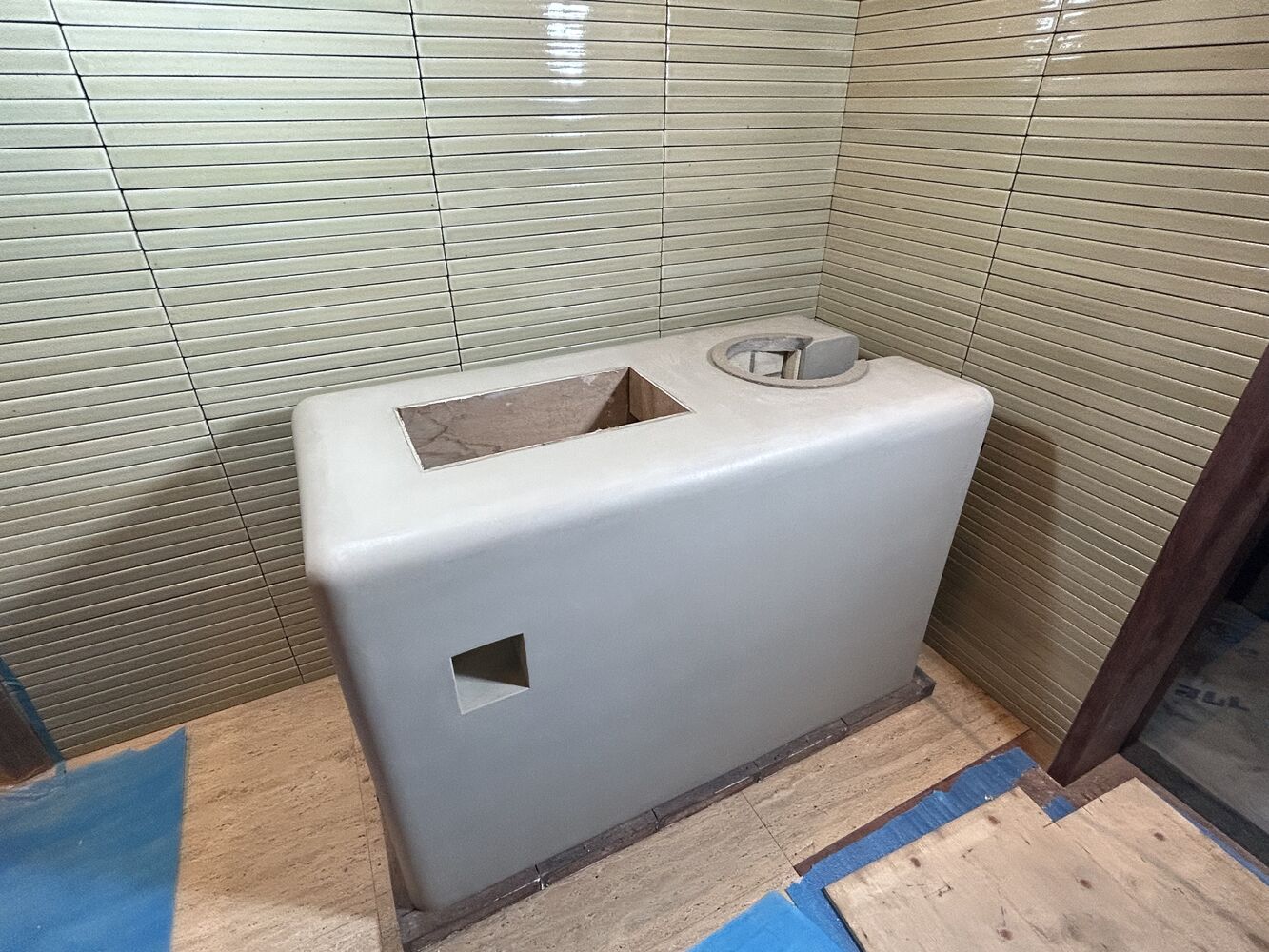
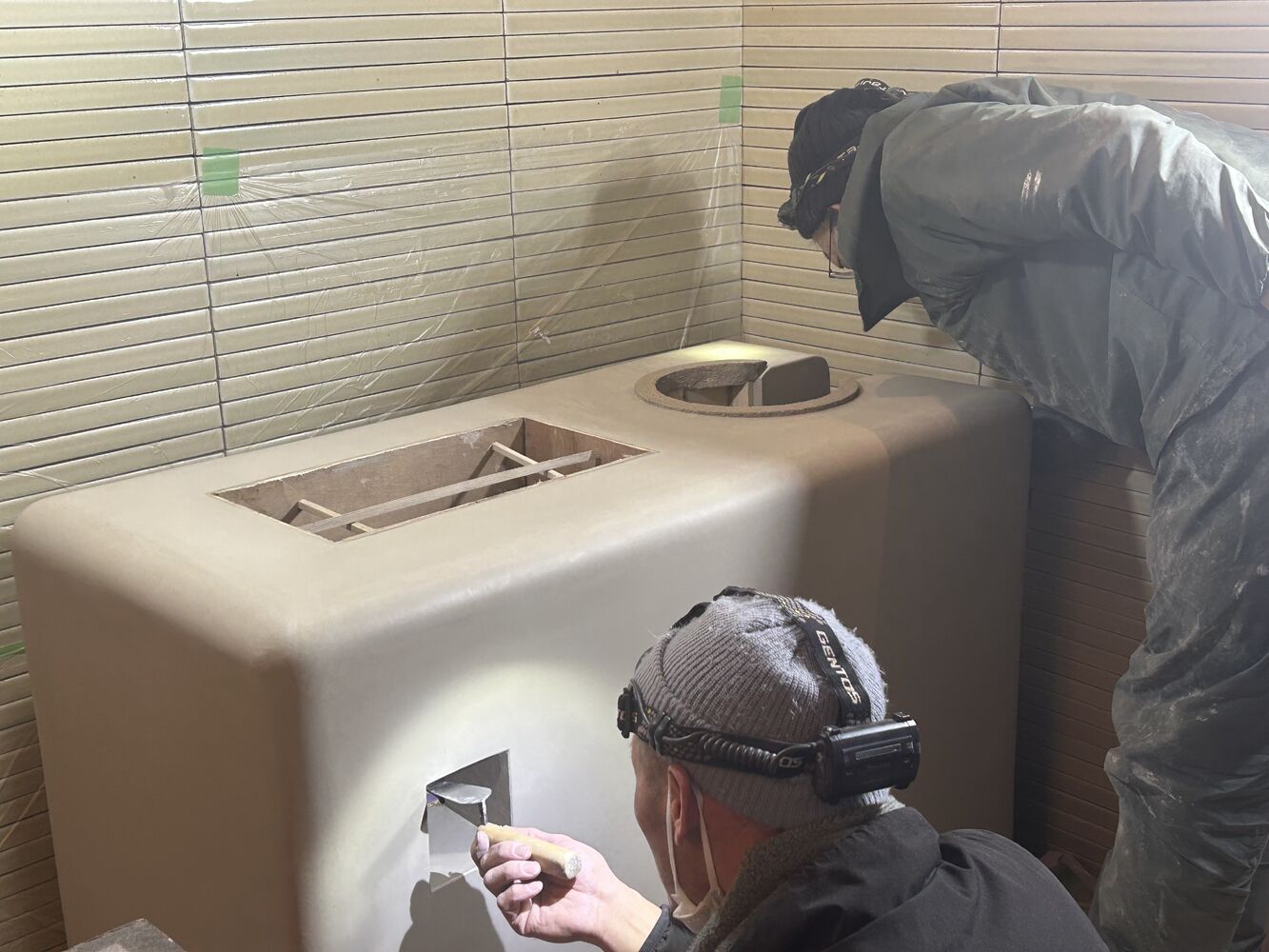


When visiting Kyoto, you may occasionally come across something that looks very different from a modern kitchen appliance: a large, traditional white hearth used for cooking with fire.
In Kyoto, such a hearth has traditionally been called an “Okudosan” (おくどさん)—a warm and respectful term for a traditional cooking hearth.
Today, most homes use gas stoves, induction cookers, and electric rice cookers, so traditional hearths have become increasingly rare in everyday life.
However, some Kyoto restaurants continue to preserve this tradition by actually using them in their kitchens.
At Masumasu Masuda, we have our own Okudosan.
For us, it is much more than a cooking appliance.
It connects the food we serve today with Kyoto’s culinary traditions and with the chef’s own experience during his years of training.
目次
An Okudosan is a traditional Japanese hearth used for cooking with fuel such as charcoal or firewood.
In Kyoto, the hearth was traditionally known as a “kudo” (竈 / くど), and the respectful prefix “o” was added, resulting in the affectionate name “Okudosan.”
In traditional Kyoto machiya townhouses, the hearth was an essential part of the kitchen.
Rice was cooked.
Food was simmered.
Water was heated.
And everyday meals were prepared over its fire.
In other words, the Okudosan was once at the heart of daily life in Kyoto.
The name itself reflects something characteristic of Kyoto culture.
In Japan, fire, food, and the kitchen have long been treated with a sense of respect.
A hearth was not simply a piece of equipment.
It was where the food that sustained the family was prepared, and where the fire that supported everyday life was kept.
For this reason, the hearth came to be spoken of with the respectful prefix “o.”
The exact origins of the terminology have several interpretations, but the word conveys a sense of familiarity and respect toward something that supported daily life.
The expression “Okudosan” can be understood as reflecting:
Gratitude toward the fire that makes food possible.
Respect for the place where meals are prepared.
And,
Kyoto’s traditional appreciation for caring for things that support everyday life.
In traditional Kyoto machiya houses, the kitchen was an important part of the home.
Rice was cooked over the hearth.
Pots were placed over the fire.
Wood or charcoal was added as necessary.
And the cook had to constantly observe the fire.
There was no button that could simply set the temperature.
If the fire was too strong, it had to be reduced.
If it was too weak, more fuel had to be added.
The cook watched the pot.
Listened to the sound of the cooking.
Observed the steam.
Smelled the food.
And judged its condition.
In other words, traditional Japanese cooking required a close relationship between the cook and the fire.
This sensitivity to fire remains an important part of Japanese cuisine today.
When you look at our Okudosan at Masumasu Masuda, you may notice that it is very different from a modern commercial kitchen appliance.
An Okudosan is not simply something that can be purchased, placed in a kitchen, and switched on.
It is constructed and finished using traditional plastering and masonry techniques.
In this sense, an Okudosan can be considered not only a cooking tool, but also a form of traditional craftsmanship.
The materials must be suitable for handling intense heat.
The structure must be carefully constructed.
And the final surface is finished by a skilled craftsman.
It is a collaboration between craftsmanship and cooking.
Unlike mass-produced kitchen equipment, a traditional Okudosan requires considerable skill and labor.
It is built according to the space in which it will be installed.
Its structure must safely accommodate fire and heat.
Materials must be selected carefully.
And the surface is finished by hand.
For this reason, its value cannot simply be compared with that of an ordinary stove or commercial cooking appliance.
It is closer to a one-of-a-kind piece of craftsmanship.
At the same time, it is designed to be used every day by a chef.
That combination is part of its appeal.
The chef of Masumasu Masuda trained in Kyoto at Kusakabe Nakahigashi, a restaurant that has long been recognized for its Kyoto cuisine and traditional approach to Japanese cooking.
There was an Okudosan there, and during his years of training, the chef became accustomed to cooking over charcoal using this traditional hearth.
He learned to observe the condition of the charcoal.
To judge the strength of the fire.
To adjust the distance between the food and the heat.
And to understand how the food was responding to the fire.
These experiences continue to influence his cooking today.
When we opened Masumasu Masuda, we wanted to incorporate this experience into our own restaurant.
That is why we have an Okudosan here in Nishijin.
At Masumasu Masuda, our Okudosan serves two important purposes:
Cooking rice.
And,
Cooking over charcoal.
The same fundamental element—fire—can create completely different forms of cuisine.
At one moment, charcoal is glowing inside the hearth as ingredients are grilled.
At another, heat is used to cook rice.
This direct relationship with fire is something that modern kitchen equipment cannot fully reproduce.
One of the characteristics of our Okudosan is that we have deliberately chosen not to cover it with paint or a decorative coating.
Instead, we wanted to preserve the natural whiteness of the earth and the beauty of the uncoated material itself.
We want our guests to see the original texture of the material.
But we also believe that an Okudosan becomes more beautiful as it is used.
If you look carefully at the charcoal-burning area of our Okudosan, you will notice that its appearance has gradually changed.
There are marks from charcoal.
Darkened areas.
Changes in color caused by heat.
And even small cracks that have developed through repeated exposure to high temperatures.
If we were only looking for the appearance of something brand new, these might simply be considered imperfections.
But we see them differently.
They are evidence that the Okudosan has actually been used to cook.
It has been heated day after day.
Charcoal has burned inside it.
Food has been grilled.
Rice has been cooked.
Heat has repeatedly entered the earth.
And through that process, the surface has developed its own character.
These marks could never have appeared if the hearth had simply been displayed and never used.
Japan has a long tradition of appreciating objects that become more beautiful through use.
Knives.
Wooden utensils.
Iron cookware.
Traditional tools.
And, we believe, the Okudosan as well.
When it was new, the surface was clean and white.
Over time, the marks of fire gradually appeared.
These are not simply signs of deterioration.
They are a record of the time spent cooking.
For that reason, while we carefully maintain our Okudosan, we do not want to erase every trace of its use.
The marks themselves are part of its story.
The appeal of charcoal cooking is not simply that it gives food a smoky aroma.
There are many things a chef must consider:
The chef must constantly make adjustments.
Rather than relying only on a fixed number of minutes, he considers:
How much heat does this particular ingredient need right now?
That judgment comes from experience.
His years of training with charcoal and an Okudosan continue to influence the way he cooks today.
Another important role of our Okudosan is cooking rice.
At Masumasu Masuda, we use rice from Tochigi Prefecture, the chef’s hometown, and serve freshly cooked white rice prepared in a clay pot.
Rice.
Water.
Fire.
The clay pot.
And the chef’s judgment.
Together, they create the finished bowl of rice.
When the lid is opened, you can experience the aroma and steam of freshly cooked rice.
Each grain has its own texture, and its natural sweetness becomes apparent as you chew.
After a multi-course Japanese meal, we believe that simple white rice can be especially satisfying.
When people visit Kyoto, they encounter temples, shrines, machiya townhouses, traditional crafts, and many other aspects of Japanese heritage.
But traditional culture is not only something to look at.
Many traditions survive because people continue to use them.
We believe the Okudosan is one example.
A hearth that once supported everyday life in Kyoto can still be used in a modern Japanese restaurant.
Traditional knowledge about working with fire can be passed on through actual cooking.
And guests can see that tradition being used in the present.
For us, that is another way of keeping Kyoto’s culinary heritage alive.
If we continue using our Okudosan for many years, its appearance will naturally change.
There may be more marks from charcoal.
The color of the earth may gradually change.
New cracks may appear.
And we look forward to seeing those changes.
Because they will represent:
the time we have spent cooking at Masumasu Masuda.
Every mark will be part of the restaurant’s history.
When you visit Masumasu Masuda, we hope you will look beyond the dishes themselves and take a moment to notice our Okudosan.
Its white, uncoated earth.
The texture of the natural material.
The marks left by charcoal.
The subtle changes created by heat.
And the rice cooked with its fire.
It connects the chef’s experience in Kyoto with the culinary traditions that have been passed down through generations.
An Okudosan is not simply an old-fashioned cooking appliance.
It connects Kyoto’s traditional way of life, the art of working with fire, the craftsmanship of plastering, the experience of the chef, and the everyday act of eating.
At Masumasu Masuda in Nishijin, we hope you will enjoy not only our seasonal Japanese cuisine, but also the story and character of the Okudosan that continues to cook alongside us.
ますます増田
住所:京都府京都市上京区旧大宮通中立売上る庇町187−1