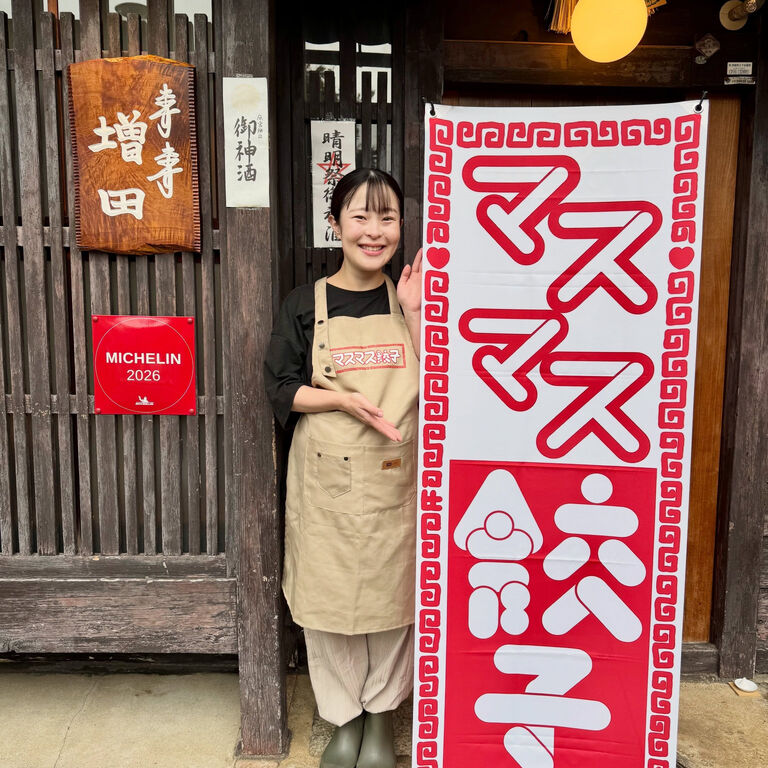
🥟マスマス餃子、いよい...
🥟マスマス餃子、いよいよ明日出店✨
大将がデザインした
「マ...
24.Oct.2026
When people think of autumn in Kyoto, many imagine beautiful autumn leaves.
For chefs, however, autumn is also one of the most exciting seasons of the year.
As the intense summer heat begins to fade, a wide variety of fish, vegetables, nuts, and other ingredients come into season.
In Japanese cuisine, these seasonal ingredients are not simply cooked and served. The season is also expressed through the choice of tableware, presentation, aroma, temperature, and even the atmosphere of the dining space.
In this article, we introduce 10 seasonal ingredients that we recommend experiencing during autumn in Kyoto, from the perspective of a Japanese chef.
At Masumasu Masuda, a Japanese restaurant in Nishijin, Kyoto, near the Imadegawa area, we change our menu every month according to the season.
If you are visiting Kyoto in autumn, we hope this guide will help you discover another side of Kyoto through its food.
目次
One of the most iconic ingredients of autumn in Japanese cuisine is the matsutake mushroom.
Its greatest appeal is its distinctive aroma.
Matsutake can be prepared in many ways, including grilled dishes, dobin mushi (a traditional clear soup served in a small teapot), and steamed rice.
In particular, dobin mushi allows you to enjoy the fragrance of matsutake together with delicate Japanese dashi.
Japanese cuisine is not only about tasting the season.
It is also about smelling the season.
Matsutake is one of the ingredients that expresses this idea beautifully.
Hamo, or pike conger, is one of the fish most closely associated with Kyoto cuisine.
Many visitors associate hamo with summer, but it can also be enjoyed beautifully in autumn.
After spending the summer feeding, hamo develops a richer flavor as autumn approaches.
Because hamo has many fine bones, Kyoto chefs traditionally use a specialized technique called hone-giri, or bone-cutting, in which the bones are finely cut without separating the flesh.
Hamo can be prepared in many ways, including hamo no hamayaki, clear soups, and otoshi (blanched hamo).
The same fish can have a completely different character depending on the season.
This is one of the fascinating aspects of Japanese cuisine.
Amadai, often called guji in Kyoto, is another important fish in traditional Kyoto cuisine.
It has delicate flesh, a subtle sweetness, and an elegant flavor.
It is often prepared as a grilled dish or served in a clear soup, allowing the natural flavor of the fish to shine.
In Kyoto cuisine, delicate fish such as amadai are often paired with carefully prepared dashi to bring out their subtle umami.
It is not an ingredient with an overpowering flavor.
Instead, its beauty becomes more apparent as you continue eating.
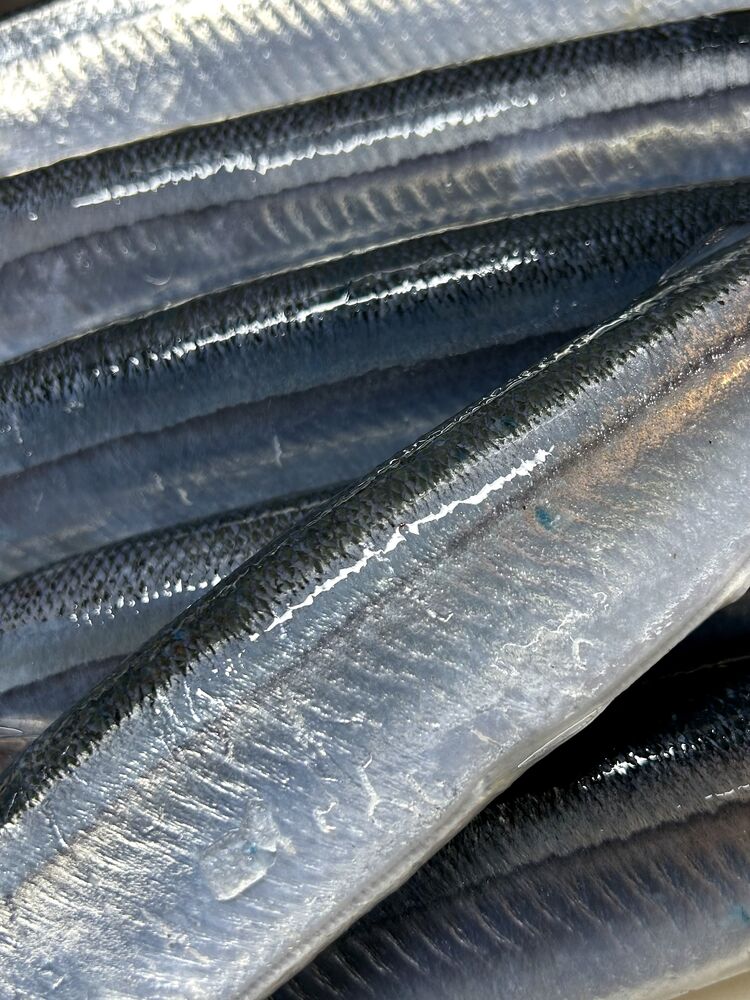
Pacific saury, known as sanma in Japanese, has long been associated with autumn.
A beautifully fatty autumn saury can be delicious simply grilled over charcoal.
Japanese cuisine also uses saury in preparations such as sushi and vinegared dishes.
Even familiar ingredients can reveal their true character when enjoyed at the right time of year.
For many Japanese people, the flavor of grilled saury is itself a reminder that autumn has arrived.
Ayu, or sweetfish, is generally thought of as a summer fish.
As autumn approaches, however, ayu enters another stage known as ochi-ayu, or “descending ayu,” as the fish prepare to migrate downstream for spawning.
The flavor and character of the fish differ from those of summer ayu.
Japanese cuisine pays attention not only to the ingredient itself, but also to where that ingredient is in its seasonal cycle.
A single fish can tell the story of the changing seasons.
That is another reason why seasonal Japanese cuisine is so fascinating.
Ginkgo nuts, known as ginnan in Japanese, are another ingredient that immediately evokes autumn.
Their beautiful yellow-green color, distinctive aroma, and subtle bitterness make them a wonderful seasonal ingredient.
They can be grilled and served simply, or incorporated into soups, steamed dishes, and rice.
Japanese cuisine values not only flavor, but also color and aroma.
Sometimes, simply seeing the beautiful color of ginkgo nuts is enough to make us feel that autumn has arrived.
Chestnuts are another classic autumn ingredient in Japan.
They have a gentle natural sweetness and can be used in both savory dishes and traditional Japanese sweets.
One of the most familiar preparations is chestnut rice, or kuri gohan.
Steamed rice combined with tender chestnuts and a touch of salt creates a wonderfully simple expression of autumn.
The dish is not complicated.
That is precisely why the natural flavor of the season can be appreciated so clearly.
The Tamba region, located north of Kyoto, is famous for its high-quality black soybeans.
Known as Tamba kuromame, these beans are particularly large and flavorful.
They are enjoyed in various Japanese dishes, especially from autumn through winter.
At first glance, beans may seem like a simple ingredient.
But in Japanese cuisine, even seemingly humble ingredients can carry the history and character of a region.
When dining in Kyoto, paying attention to the vegetables and beans used in a dish can reveal another layer of the area’s food culture.
Satoimo, or Japanese taro, becomes particularly enjoyable as the seasons move from autumn toward winter.
It has a soft, slightly sticky texture and a gentle flavor.
It can be simmered, steamed, or incorporated into clear soups and other Japanese dishes.
When cooked with dashi, satoimo absorbs the umami while retaining its own delicate character.
Simple ingredients such as satoimo are also an excellent opportunity to appreciate the skill of a Japanese chef.
The goal is not to overpower the ingredient, but to bring out what is already there.
Eggplant is enjoyed throughout the year in Japan, but autumn eggplant, or aki nasu, has its own appeal.
As the season changes, the skin becomes tender and the flavor develops.
Eggplant can be grilled, fried, simmered, or steamed, with each cooking method creating a different expression.
Japanese cuisine often changes the way an ingredient is prepared according to the season.
The important question is not simply,
“Is this ingredient delicious?”
but also,
“Why is it especially delicious now?”
That sense of timing is at the heart of seasonal Japanese cuisine.
These 10 ingredients are wonderful examples of autumn flavors.
But autumn in Japanese cuisine is not expressed through ingredients alone.
It can also be expressed through:
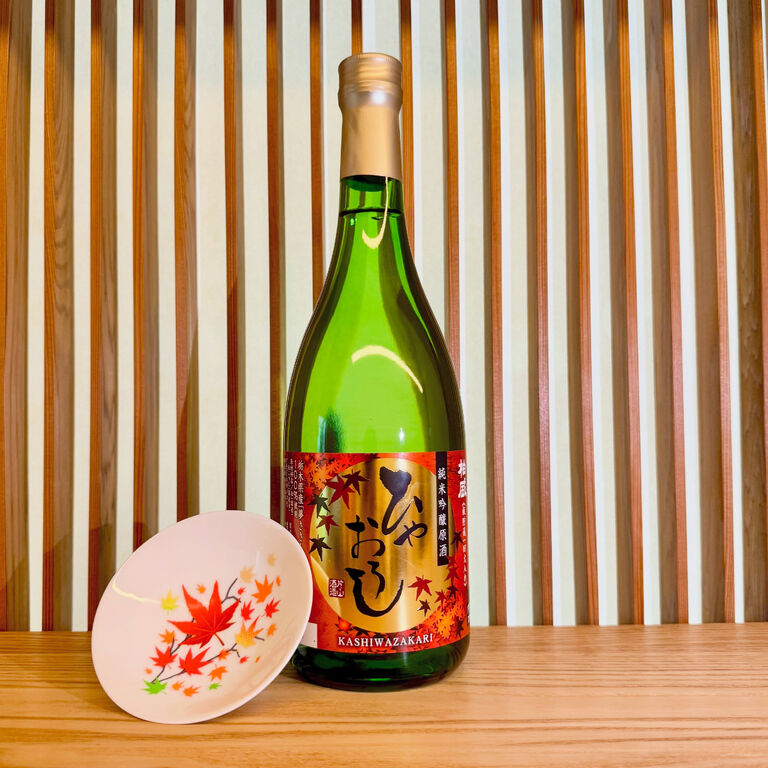
For example, even when using autumn ingredients, the choice of tableware can completely change the feeling of a dish.
A chef might use warm autumn colors, seasonal patterns, or particular textures to create a sense of the season.
The goal is for a guest to take a bite and think,
“Autumn has arrived.”
This is one of the beautiful aspects of Japanese cuisine.
At Masumasu Masuda, a Japanese restaurant in Nishijin, Kyoto, near the Imadegawa area, we offer a monthly seasonal omakase course.
Our chef creates each month’s menu by carefully considering the ingredients available at that particular time of year.
We primarily use seasonal ingredients from Kyoto and throughout Japan, while also incorporating ingredients from Tochigi Prefecture, the chef’s hometown.
During autumn, we select the fish and vegetables that are at their best and adjust the dashi, cooking methods, and heat accordingly.
Sushi, tempura, and wagyu beef may also appear in the course, depending on the season and the balance of the menu.
September, October, and November are all autumn, but the ingredients gradually change from month to month.
That is why we review and adjust our menu every month.
When people think about autumn in Kyoto, the first thing that often comes to mind is the changing color of the leaves.
But autumn in Kyoto can be experienced in many other ways.
The mountains.
Temple gardens.
Traditional townhouses.
Historic streets.
And the seasonal ingredients served at the dining table.
For centuries, people in Kyoto have paid close attention to the changing seasons and incorporated them into everyday life.
That philosophy continues to live on in Japanese cuisine.
The richness of autumn saury.
The fragrance of matsutake.
The color of ginkgo nuts.
The sweetness of chestnuts.
The delicate texture of satoimo.
Each ingredient carries a small expression of autumn.
When visiting Kyoto, it is natural to plan your trip around famous temples, shrines, and autumn foliage.
Those experiences are certainly an important part of traveling in Kyoto.
But we also recommend looking at the city from another perspective.
Ask yourself:
“What is in season today?”
Take a walk through Nishijin and the Imadegawa area, discover traditional townhouses and quiet streets, and then enjoy a seasonal Japanese meal in the evening.
This can be a wonderful way to experience another side of Kyoto.
Masumasu Masuda is located in a Kyomachiya more than 100 years old, renovated as a Japanese restaurant.
The restaurant retains the atmosphere of a traditional Kyoto townhouse, including a small inner garden, or tsuboniwa.
While enjoying seasonal Japanese cuisine, we hope you will also take a moment to appreciate the architecture, the garden, the tableware, and the atmosphere around you.
Autumn in Kyoto is not something you only see.
It is something you can taste, smell, feel, and experience.
If you are visiting Kyoto, Nishijin, or the Imadegawa area this autumn, we hope you will enjoy the seasonal flavors that can only be experienced at that particular time of year.
We look forward to welcoming you to Masumasu Masuda and sharing the flavors of autumn with you.
ますます増田
住所:京都府京都市上京区旧大宮通中立売上る庇町187−1