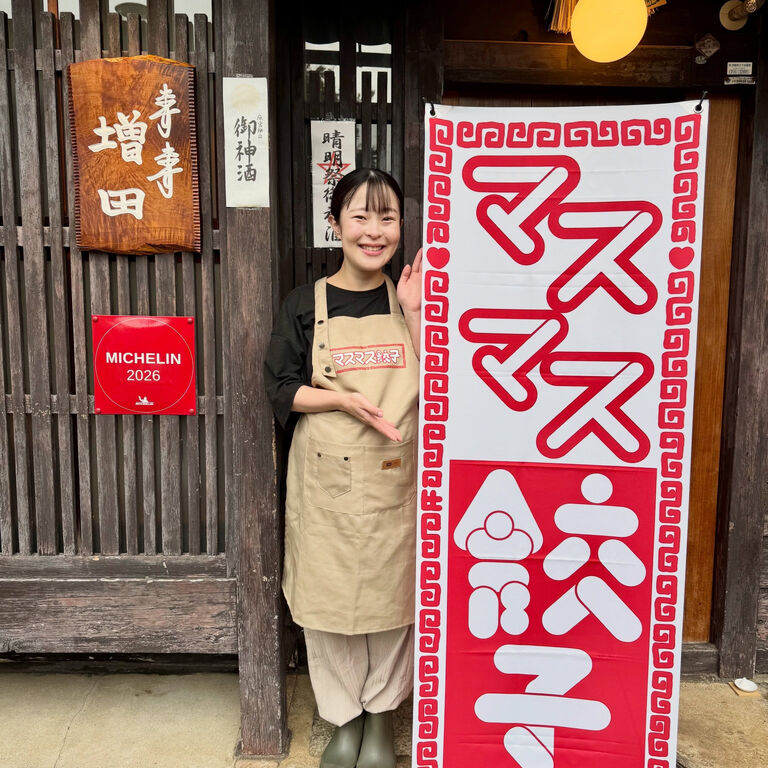
🥟マスマス餃子、いよい...
🥟マスマス餃子、いよいよ明日出店✨
大将がデザインした
「マ...
24.Oct.2026
September in Kyoto is a time of transition.
Summer has not completely disappeared, and warm days often continue. At the same time, however, the air in the early morning and evening becomes cooler, the wind begins to change, and the sky gradually starts to feel more like autumn.
For Japanese cuisine, September is a particularly fascinating month.
Some ingredients still carry the flavors of summer, while others—such as matsutake mushrooms, chestnuts, and gingko nuts—begin to announce the arrival of autumn.
In other words, September is a season when you can experience both:
the end of summer and the beginning of autumn.
If you are visiting Kyoto in September, we encourage you to experience the changing seasons not only through temples, shrines, and sightseeing, but also through food.
From the perspective of a Japanese chef running Masumasu Masuda, a Japanese restaurant in the Nishijin and Imadegawa area of Kyoto, we would like to introduce seasonal ingredients to enjoy in September and the unique pleasures of Kyoto at this time of year.
目次
It is still a little early to describe all of September in Kyoto simply as “autumn.”
Especially in early September, the heat of summer often remains.
However, compared with August, the atmosphere gradually begins to change.
The sun sets earlier.
Cooler breezes can be felt in the morning and evening.
And the ingredients arriving at markets slowly begin to change.
For chefs, September may be one of the easiest times of the year to notice the changing seasons.
Summer ingredients such as:
begin to share the kitchen with autumn ingredients such as:
One season is coming to an end, while another is beginning.
This sense of transition is one of the most interesting aspects of Japanese cuisine in September.
When people think of autumn ingredients in Japan, matsutake mushrooms are often among the first things that come to mind.
The greatest appeal of matsutake is its distinctive aroma.
In Japanese cuisine, flavor is not the only important element. Aroma is also an essential part of the dining experience.
The fragrance released when matsutake is grilled.
The aroma that rises when the lid of a soup bowl is opened.
The scent of matsutake rice.
These moments alone can make you feel:
“Autumn has arrived.”
Matsutake is one of Japan’s most iconic ingredients for experiencing the season through all five senses.
Pacific saury, known in Japanese as sanma, has long been one of Japan’s most popular autumn fish.
Many people associate sanma with simply being grilled, but in Japanese cuisine, it can be prepared in many different ways.
For example:
The best preparation depends on the condition of the fish.
Its size.
Its fat content.
And the time of year.
That is why a chef does not simply think:
“It is autumn, so we should serve sanma.”
Instead, the important question is:
“What condition is the sanma in today?”
Understanding the ingredient at that particular moment is an important part of a chef’s work.
Hamo, or pike conger, has a deep connection with Kyoto cuisine.
It is particularly well known as a summer ingredient.
However, hamo in September can offer a different character from hamo enjoyed during the height of summer.
As the season changes, its condition and fat content can also change.
For this reason, the preparation may change as well.
Hamo can be enjoyed in many ways, including:
One of the most important techniques used when preparing hamo is honekiri, or finely cutting through the numerous small bones.
This technique allows the fish to be enjoyed with its delicate texture.
September is a wonderful time because summer ingredients such as hamo can still be enjoyed alongside the first ingredients of autumn.
Amadai, often called guji in Kyoto, is another fish that has an important place in Japanese cuisine.
It is known for its delicate texture and gentle sweetness.
Depending on the preparation, amadai can take on very different characteristics.
It may be served:
In Kyoto-style Japanese cuisine, the goal is often not to overpower an ingredient.
Instead, the chef tries to bring out the ingredient’s natural character.
For a delicate fish such as amadai, the use of dashi and careful control of heat can dramatically change the final result.
Its flavor may seem quiet and subtle at first.
But the more you eat, the more you begin to appreciate its depth.
This gentle elegance is one of the qualities that makes amadai so well suited to Kyoto cuisine.
Ayu, or sweetfish, is strongly associated with summer in Japan.
However, as autumn approaches, ayu enters its spawning season.
Sweetfish at this stage are sometimes called ochi-ayu, meaning ayu that are moving toward the later stage of their seasonal cycle.
They offer a character different from the young ayu enjoyed during summer.
Japanese cuisine does not simply ask:
“What kind of fish is this?”
It also asks:
“What season is this fish experiencing right now?”
Even the same type of fish can have very different qualities depending on the time of year.
For example:
Each stage has its own appeal.
September is a wonderful time to experience these subtle seasonal changes through food.
As September arrives, chestnuts gradually begin to appear as one of the flavors of autumn.
The appeal of chestnuts lies in their natural sweetness.
In Japanese cuisine, chestnuts can be used in many ways, including:
One of the most comforting autumn dishes is freshly cooked rice with chestnuts.
Soft, naturally sweet chestnuts.
Freshly steamed rice.
A small amount of salt.
It is not a complicated dish.
But that simplicity allows the natural flavor of the ingredients to stand out.
Japanese cuisine often values the idea of enjoying seasonal ingredients in a straightforward and uncomplicated way.
Chestnuts are one of the ingredients that best express this philosophy.
Gingko nuts are another ingredient that signals the arrival of autumn.
Their appeal includes:
Their beautiful yellow-green color.
Their distinctive aroma.
And their slight bitterness.
In Japanese cuisine, color is just as important as flavor.
Even a single gingko nut can change the appearance of an autumn dish.
Gingko nuts may be enjoyed:
A single dish can express:
Flavor.
Aroma.
Color.
And the season.
This combination of elements is one of the pleasures of Japanese cuisine.
In September, many summer vegetables are still delicious.
Eggplant is one of them.
September is a transitional month, so summer ingredients do not suddenly disappear.
Instead, they can be combined with the first ingredients of autumn.
Eggplant can be:
The impression of the ingredient changes dramatically depending on the cooking method.
Eggplant works beautifully with oil, but it also has a wonderful relationship with dashi.
In Japanese cuisine, chefs choose the preparation based not only on the ingredient itself, but also on the temperature of the day and the overall flow of the meal.
When the weather is still hot, eggplant may be served in a refreshing chilled dish.
As the weather becomes cooler, a warm preparation may become more suitable.
The same ingredient can express the changing season in different ways.
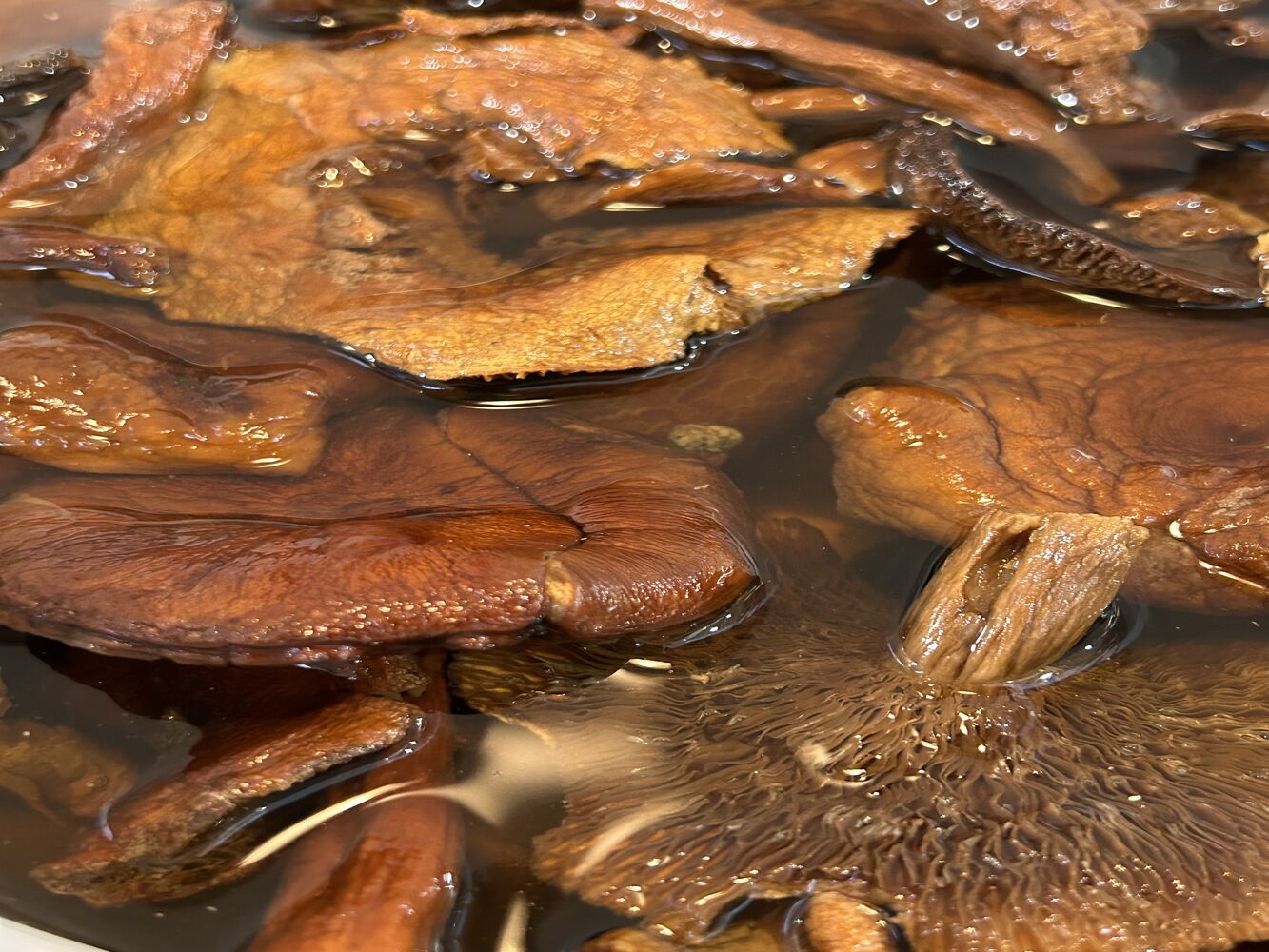
Autumn brings many delicious mushrooms to Japanese cuisine.
And it is not only matsutake.
For example:
Many different varieties begin to appear during autumn.
One of the most interesting qualities of mushrooms is that each variety has its own:
In Japanese cuisine, each mushroom is used according to its individual character.
A chef may want to highlight its fragrance.
Another preparation may focus on its texture.
Or the mushroom may be used to add depth and umami to a dish.
Mushrooms bring a sense of richness and depth to autumn cuisine.
They are also ingredients that allow us to experience the gifts of Japan’s mountains.
Taro is another important ingredient in Japanese cuisine during autumn.
It is known for:
Its soft texture.
Its gentle flavor.
And its excellent relationship with dashi.
Taro can be used in many dishes, including:
Taro does not have an overwhelmingly strong flavor.
For this reason, the chef’s handling of the ingredient can make a significant difference.
The goal is to allow the taro to absorb the flavor of the dashi while preserving its own natural character.
Japanese cuisine does not aim to cover ingredients with the flavor of the broth.
Instead, dashi is often used to bring out the natural appeal of the ingredient.
The gentle flavor of taro is particularly comforting as Kyoto gradually becomes cooler in September.
Perhaps the most interesting aspect of Japanese cuisine in September is that:
summer and autumn can exist on the same table.
Hamo.
Ayu.
Eggplant.
These ingredients still remind us of summer.
Then there are:
Matsutake mushrooms.
Pacific saury.
Chestnuts.
Gingko nuts.
These ingredients announce the beginning of autumn.
Within a single course, a chef can express the transition from the end of summer toward autumn.
Japanese cuisine is not simply about placing seasonal ingredients on a table.
The chef considers:
The order of the dishes.
The temperature.
The balance of flavors.
And the flow of the entire meal.
Together, these elements create an experience.
September is one of the best months to enjoy this gradual seasonal transition.
One important seasonal tradition in September is Choyo no Sekku, celebrated on September 9.
It is one of Japan’s five traditional seasonal festivals and is also known as the Chrysanthemum Festival.
For centuries, chrysanthemums have been associated with wishes for:
Japanese cuisine often incorporates seasonal traditions into food.
Chrysanthemums may appear in the presentation of a dish.
Seasonal motifs may be reflected in tableware and decorations.
And ingredients associated with the season may be incorporated into the menu.
Food is something we eat.
But it can also communicate:
The season.
Culture.
And tradition.
Before visiting Kyoto, it can be interesting to learn about the festivals and seasonal customs taking place during your trip.
It may help you experience the city in a deeper way.
September in Kyoto can still be hot.
Especially during the daytime, temperatures may sometimes feel similar to summer.
For this reason, it can be helpful to plan sightseeing around different times of the day.
For example:
Kyoto’s beauty is not limited to its daytime sightseeing.
There are also:
Quiet temples in the early morning.
Machiya streets at sunset.
Evening walks when the air becomes cooler.
As the season changes, the appearance of Kyoto changes as well.
September offers a slightly different experience from the peak summer travel season.
At Masumasu Masuda, located in the Nishijin and Imadegawa area of Kyoto, we offer a monthly changing omakase course.
Our chef visits the market and carefully considers the ingredients available before creating each month’s menu.
September is particularly interesting because the season changes quickly.
Should we continue to enjoy summer ingredients?
Should we begin introducing autumn ingredients?
How should the same ingredient be prepared at this particular moment?
These are the questions we consider.
We do not simply decide:
“It is September, so we must serve this dish.”
Instead, we carefully look for ingredients that are at their best at that particular time.
Then we consider how to prepare them in the most delicious way.
That is one of the greatest appeals of an omakase course.
In addition to seasonal ingredients from Kyoto and other regions of Japan, we also incorporate ingredients from Tochigi Prefecture, the hometown of our chef.
Through these ingredients, we create Japanese cuisine that expresses the unique character of September.
Sightseeing is, of course, one of the great pleasures of visiting Kyoto.
However, experiencing seasonal ingredients is also an important way to understand the city.
Visit a temple.
Walk through historic streets.
Discover the history of Nishijin.
Explore the quiet atmosphere of the Imadegawa area.
And at the end of the day, enjoy seasonal Japanese cuisine.
Through these experiences, we hope you will feel:
“Kyoto is changing from summer to autumn.”
The seasons in Kyoto are not determined only by a calendar.
They can be felt through:
The wind.
The sky.
The changing scenery.
And the ingredients arriving at the market.
Little by little, everything begins to change.
September in Kyoto still carries the memories of summer.
At the same time, it welcomes the beginning of autumn.
Hamo.
Ayu.
Eggplant.
The flavors of summer.
Matsutake mushrooms.
Pacific saury.
Chestnuts.
Gingko nuts.
The flavors of autumn.
The combination of these two seasons is one of the greatest attractions of Japanese cuisine in September.
At Masumasu Masuda, located in Kyoto’s Nishijin and Imadegawa area, we serve seasonal Japanese cuisine inside a beautifully preserved machiya townhouse more than 100 years old.
We hope our guests can experience September in Kyoto not only through food, but also through:
The tsuboniwa courtyard garden.
The warmth of old wooden materials.
Seasonal decorations.
And conversations shared around the counter.
If you are visiting Kyoto in September, we encourage you to look beyond sightseeing and discover the ingredients that can only be enjoyed at this particular moment.
From summer to autumn.
As Kyoto gradually changes its colors, we hope you will enjoy Japanese cuisine that captures the beauty of that transition.
At Masumasu Masuda, we look forward to welcoming you and sharing the flavors, culture, and changing seasons of Kyoto through Japanese cuisine.
ますます増田
住所:京都府京都市上京区旧大宮通中立売上る庇町187−1